
Most LinkedIn engagement goes nowhere. In the data cited here, 87% of B2B LinkedIn content creates zero pipeline, and posts with 1,000–3,000 impressions often beat viral posts on revenue impact.
If I want LinkedIn to drive pipeline, I need to do three things well:
- Watch for buying signals, not vanity activity
- Reach out within 24–48 hours
- Track conversations, meetings, and opportunities instead of likes and views
The article makes one point clear: visibility is not the goal. Pipeline is. A comment, repeat likes, or a profile view from the right buyer can open the door, but only if I follow up with context and move the exchange into DMs while interest is still there.
A few numbers stand out:
- Signal-based DMs can get 15%–25% reply rates
- Generic cold templates often sit around 1%–2%
- A 15-minute daily routine can keep the system moving
- Teams should watch for 2–4 meetings per week as a working benchmark
In short, I should treat LinkedIn engagement like an intent feed: filter for ICP fit, act fast, keep messages personal, and measure booked meetings and pipeline in USD, not social activity.
Why LinkedIn Efforts Stall Before Reaching Pipeline
Vanity Activity vs. Buyer Signals
Most teams confuse activity with intent. A like or a generic comment can look like momentum, but it usually doesn't tell you much about pipeline.
The missing piece is intent. A one-time like from someone outside your ICP is just noise. A thoughtful comment from an ICP decision-maker on a post about a specific pain point? That's a signal you should act on.
Use intent-based lead generation, not popularity, to decide who gets a follow-up.
| Engagement Type | Intent Level | What It Means |
|---|---|---|
| One-off like from a random connection | Low | Log only |
| Repeat likes or follows | Moderate | Engage publicly first |
| Thoughtful comment on a pain-point post | High | Reply, then DM within 24–48 hours |
| Profile view from an ICP decision-maker | High | Connect or DM with context |
Broad reach helps creators more than sellers. In B2B, what matters is getting the right message in front of the right buyers.
The next move is simple: catch those signals before they cool off.
Why Pipeline Breaks Without a Follow-Up System
Even when the right person engages, most teams let the moment slip away. No one logs the comment. No one sends the DM. The interaction gets buried in a crowded feed, and a warm signal turns cold.
Without a system to capture and follow up, warm signals fade before they become conversations.
The strongest signal is the number of DM conversations that start within 48 hours of a post. Most teams miss that window - not because they don't care, but because nothing is set up to catch it.
The pattern is pretty clear:
- No ICP filter
- No tracking
- No personal outreach
- No next step
Once the signal is there, speed matters.
What Success Looks Like in B2B Terms
The metric that counts is simple: does engagement turn into conversations your team can sell into?
Success means qualified conversations, booked meetings, and created opportunities. Not follower growth.
A VP with 2,400 followers secured $1.2 million in attributed pipeline by optimizing for revenue-focused intent instead of broad reach. Warm outreach to people who engaged converts at higher rates than cold outreach. But that lift only happens when you have a system to capture the signal, qualify the person, and start a real conversation fast.
sbb-itb-f8f3793
How To Create LinkedIn Content That Drives B2B Sales
How to Find High-Intent Decision-Makers and Create Warm Entry Points
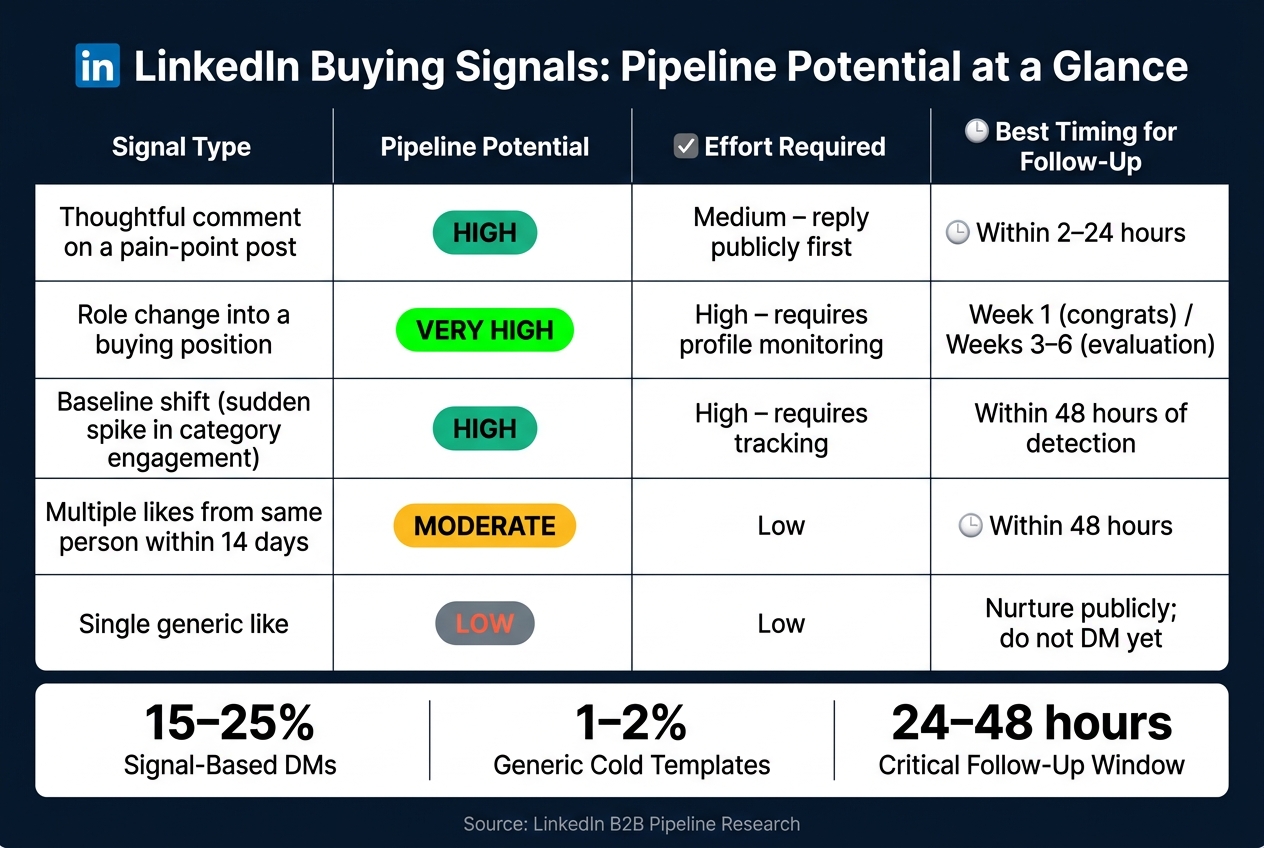
LinkedIn Engagement Signals vs. Pipeline Impact: B2B Intent Guide
How to Read Intent From Engagement Behavior
Job title by itself won't tell you who's ready to buy. Behavior usually does.
On LinkedIn, the strongest buying signals tend to come from patterns, not random one-off actions. If someone normally just taps "like" and then suddenly starts commenting on several posts about your category in the same week, that's a shift worth paying attention to. A change like that, compared with their usual behavior, can be a stronger sign than any single action on its own.
A few behaviors tend to point to active buying interest:
- Role changes into buying positions can open a budget review window, especially at smaller companies where approvals are easier.
- Team-level clustering matters. One person from a company engaging with a competitor is a light signal. Three people from that same company doing it within 14 days points more toward active evaluation.
- Comment depth helps you separate interest from noise. A comment with a clarifying question or a counterpoint shows intent. A one-word "Following" does not.
Once you can spot intent, the next move is simple: turn that interaction into a real conversation.
Turn Comments Into Pipeline Moments
A good comment can do two jobs at once. It helps a buyer recognize your name, and it gives you a natural reason to continue the conversation in DMs.
The order matters here. If a decision-maker leaves a thoughtful comment on a post about a pain point you solve, reply in public first. Then send a DM with context. That public back-and-forth makes the DM feel like the next step in an existing conversation, not a cold pitch dropped out of nowhere.
Timing matters too. The window is short. Signal-based outreach tied to a specific comment or engagement gets 15–25% reply rates, compared with 1–2% for generic templates. Wait too long, and that gap disappears fast.
Here's how the main signal types compare when you're deciding where to spend your time:
| Signal Type | Pipeline Potential | Effort Required | Best Timing for Follow-Up |
|---|---|---|---|
| Thoughtful comment on a pain-point post | High | Medium - reply publicly first | Within 2–24 hours |
| Role change into a buying position | Very High | High - requires profile monitoring | Week 1 (congrats) / Weeks 3–6 (evaluation) |
| Baseline shift (sudden spike in category engagement) | High | High - requires tracking | Within 48 hours of detection |
| Multiple likes from the same person within 14 days | Moderate | Low | Within 48 hours |
| Single generic like | Low | Low | Nurture publicly; do not DM yet |
When you're doing this at scale, you need a system. Otherwise, these moments just slip past in the feed.
Use Postelix to Surface Who Fits and Why Now
Once volume goes up, manual scanning starts to break. The hard part isn't knowing which signals matter. It's spotting them again and again without missing the right people.
Postelix is built for that job. It finds people showing clear buying intent across LinkedIn, then scores each one against your ICP and shows why they fit and why now. So instead of digging through comments and checking profiles one by one, you get a prioritized view of who deserves outreach and what makes the timing work.
Each lead comes with the context you need to write a relevant DM. And because you approve every action, nothing happens without your sign-off - there's no automated outreach. You keep control of every touchpoint, which is what makes the outreach feel personal instead of mechanical.
That's how feed engagement turns into booked meetings instead of getting lost in the scroll.
How to Convert Engagement Into Booked Meetings
Write Personalized DMs From the Actual Interaction
Once a buyer signal is clear, the job changes. You’re no longer trying to spot interest. You’re trying to turn that interest into a real conversation.
The DM should come from the strongest signal you’ve already seen: a thoughtful comment, a role change, or a clear shift in engagement. Its job is simple: move the interaction toward a specific next step.
Start by pointing to the exact post or comment they engaged with. Then tie that back to a business problem they may be dealing with. Don’t force a pitch. Start the conversation, not the pitch. One concrete reason to reply is enough, like a benchmark, a short insight, or an observation linked to what they said.
That keeps the door open for what comes next: staying in the thread until the prospect is ready to talk.
Handle Replies and Follow Up Without Losing Warmth
When a prospect replies, don’t rush to drop a calendar link. Keep the conversation going, and bring up a meeting only after they’ve recognized a pain point.
A DM tied to the interaction tends to work best when it lands within 24–48 hours of the engagement. If they don’t respond, send one follow-up with new context. Not a “just checking in,” which usually goes nowhere. Give them an easy way to say yes, whether that’s with a short reply, a simple question, or a 15-minute call.
Keep the Process Human While Cutting Manual Work
At scale, the hard part usually isn’t writing the message. It’s keeping the context, timing, and follow-up in sync.
That’s where Postelix fits into the workflow. It drafts DMs straight from the interaction context - the post, the comment, or the signal - and syncs your LinkedIn inbox so nothing gets missed. It also brings reply chances to the surface as they come in. Nothing goes out without your approval, which helps each touchpoint stay in line with how you already write and talk.
Build a Repeatable LinkedIn Pipeline System and Track What Matters
A Simple Daily and Weekly Operating Rhythm
Once you can spot intent and start conversations, the next move is building a rhythm you can stick to. The goal is 15 focused minutes a day, not hours of random scrolling.
Daily:
- 5 minutes on replies to overnight DMs and comments
- 5 minutes leaving 3–5 thoughtful comments on ICP posts
- 5 minutes on DMs triggered by a specific interaction, with each message naming the exact engagement that prompted the outreach
Those daily actions start conversations. The weekly work makes sure you still have people to talk to next week.
Weekly:
- Schedule 3 posts to stay visible
- Refresh your lead list with 200–400 ICP-matched contacts
- Triage your inbox so no positive reply sits untouched for more than 24–72 hours
Postelix fits this cadence by surfacing intent, drafting context-based DMs, and keeping replies in one approval queue.
Metrics That Show LinkedIn Is Creating Pipeline
Track the numbers that show whether engagement is turning into pipeline, not just motion for the sake of motion.
| Metric Category | KPI | Target |
|---|---|---|
| Leading | Comment reply rate | 25%+ |
| Leading | Warm DM reply rate | 15%–20% |
| Mid-Funnel | Meeting booking rate from positive replies | ~25% |
| Lagging | Meetings booked | 2–4 per week |
| Lagging | Opportunities created | Varies by ACV |
| Lagging | Influenced pipeline value | Track in USD |
Reply speed and meeting conversion are the link between engagement and revenue. If DM conversations aren't starting within 48 hours of a post, the system isn't working, no matter how much reach the post got.
Conclusion: Engagement Works When It Is Tied to Intent, Follow-Up, and Discipline
LinkedIn creates pipeline when you target buyers, reply fast, and run the process every day.
FAQs
What counts as a real buying signal on LinkedIn?
A real buying signal on LinkedIn is a verifiable sign that a decision-maker at a target account is looking into your category or dealing with a pain point you solve.
The stronger signals tend to show more intent. Think thoughtful comments, repeat engagement across several posts, profile visits, recent job changes, posts about related problems, or mentions of colleagues. Likes and follows matter too, but they’re lighter-touch awareness signals.
How fast should I follow up after someone engages?
Follow up within 24 to 48 hours after a prospect engages. During that window, your content is still fresh in their mind, and your message is more likely to land. Wait longer than a week, and your odds of getting a reply can drop fast.
Postelix helps you move while the timing is still on your side. It surfaces high-value engagement and drafts personal messages in your own voice, so you can reach out when the prospect is most likely to respond.
How do I track LinkedIn pipeline without focusing on likes?
Look past vanity metrics like likes and impressions. Track DM opens, direct replies, and booked calls instead.
Think of content as the top of your sales funnel. A tool like Postelix can help you sort engagement by ICP fit and engagement depth, so you can spot high-intent leads and move them into personalized outreach.