LinkedIn messaging isn't about sending cold pitches - it’s about building trust before starting a conversation. Here’s what works:
- Engagement First: Warm up your network by writing human comments and interacting for 4–6 weeks. This approach increases response rates from 8–12% to 35–45%.
- Profile Matters: 81% of buyers review profiles before replying. A clear, outcome-focused headline and polished profile can triple your connection acceptance rates. You can even find buyer-relevant post angles to ensure your content resonates with new connections.
- Personalized Outreach: Messages under 400 characters with specific references (e.g., recent posts or company news) are 22% more likely to get replies.
- Follow-Up Strategy: 80% of sales require 5+ follow-ups. Spread your outreach over 35 days with value-driven interactions to avoid overwhelming contacts.
- Metrics to Track: Maintain a 30–45% connection acceptance rate and a 10–25% message reply rate for healthy relationship-building.
The key takeaway? Treat LinkedIn messaging as part of a broader relationship-building strategy, not a shortcut to quick results. Start conversations, don’t sell immediately, and focus on consistent, meaningful interactions.
Why Relationship Building Wins on LinkedIn
sbb-itb-f8f3793
Setting the Foundation: Preparing Your LinkedIn Profile and Target List
Your LinkedIn profile serves as your personal landing page. When you reach out to someone, the first thing they do is check your profile. In fact, 81% of B2B buyers review profiles before responding, and 50% actively avoid sales professionals with incomplete or unclear profiles. If your profile doesn’t immediately convey trust and relevance, even the most well-crafted message can fall flat.
How to Optimize Your LinkedIn Profile for Credibility
Your headline is one of the most visible parts of your profile, so make it count. Use an outcome-driven formula like: "[Specific outcome] for [specific buyer type] using [credible method]." For example, instead of a generic title like "Account Executive at XYZ Corp", try something like, "Helping B2B SaaS teams shorten sales cycles using intent-based outreach." This approach can boost connection request acceptance rates by 3x.
"Your LinkedIn profile is that landing page. You wouldn't spend money on ads driving traffic to a landing page with no copy, no credibility signals, and no clear next step." - Udit Goenka, Founder & CEO, Autoposting.ai
Your About section is another key area. Start by addressing your audience’s primary challenge, write in the first person, and keep it concise. Wrap up with a soft call to action, such as a link to your calendar or a helpful resource. Don’t overlook the Featured section - it’s a powerful tool for showcasing case studies, client testimonials, or content that highlights your expertise. With decision-makers spending an average of 11 seconds on a profile, every element above the fold should grab attention and build credibility.
Once your profile is polished, the next step is refining your network by identifying your ideal connections.
How to Define Your Ideal Relationship Targets
With your profile ready, it’s time to organize your target list. Start by exporting your LinkedIn connections (go to Settings > Data Privacy > Get a Copy of Your Data) and categorizing them into groups like Active Prospects, Strategic Connectors, Industry Influencers, and Dead Weight (inactive or irrelevant accounts). A smaller, focused network of 1,500 relevant connections often outperforms a larger, random one because LinkedIn’s algorithm favors relevance density.
When expanding beyond your current network, focus on signal-based targeting. For example, professionals who have recently changed jobs are 3x more likely to respond to outreach. Other valuable signals include companies that recently secured funding, brought on new leadership within the past 90 days, or are actively hiring for SDR roles - all signs of a buying-ready environment. To maintain a strong reputation score and healthy acceptance rates, limit your outreach to 20–50 targeted connection requests per week.
Tools to Help You Prepare
Managing your target list manually can quickly become overwhelming. Tools like Postelix (compare Postelix vs Taplio) simplify the process by identifying intent-based leads - contacts who match your Ideal Customer Profile and exhibit real-time buying signals. Instead of giving you a static list, Postelix explains why a lead is worth reaching out to at that moment, providing "lead reasons" to prioritize your efforts. This approach ensures you focus on the most responsive contacts, laying the groundwork for meaningful, long-term connections.
How to Write Personalized Messages That Start Conversations
Once you’ve polished your profile and narrowed down your target list, the next big step is crafting messages that actually get responses. Let’s be honest - generic LinkedIn messages often get ignored. Here’s why personalization matters: personalized connection requests average a 45% acceptance rate, compared to only 15% for generic ones. Specificity is what makes the difference.
What Makes a Strong First Message
The best first messages stand out because they include something no CRM merge field could ever auto-fill. Think about referencing a recent post, congratulating someone on a new job, or mentioning recent company news. These small details show you’ve done your homework.
"A first line now has to reference something that a merge field cannot auto-fill: a phrase from their actual post, a detail from a recent role transition." - Daniel Okoro, Outreach Tactics
Keep it short and sweet. Messages under 400 characters are 22% more likely to get a reply. For connection request notes, aim for 200–290 characters to ensure they’re fully visible, even on mobile. Think of the "5-second rule" - if your message doesn’t grab attention in a quick scan, it’s likely to get archived.
And here’s a crucial tip: don’t pitch right away. The goal of your first message is to start a conversation, not close a deal.
"The accept is permission to talk, not permission to sell." - Daniel Okoro, Outreach Tactics
Message Frameworks for Different Situations
The key to effective outreach is tailoring your message to the recipient’s recent activities or milestones. Here are four frameworks to get you started:
- The Post Hook: Perfect for warm intros or networking. Reference a specific point from their recent post to show you’ve read their content. For example: "Your post on Friday about AEs ghosting pipeline reviews nailed a challenge I hear about all the time.". This approach feels personal and relevant.
- The Trigger Line: Ideal for reaching out after someone changes jobs. Acknowledge their transition with a thoughtful observation, like: "Congrats on the new role! Those first 90 days of building a sequence library are always underestimated.". Job changers tend to be highly responsive, making this tactic especially effective.
- The Company News Line: Great for sales outreach tied to company milestones. For example: "I saw Praxis just closed a Series B last week. A round like that usually means the outbound team grows faster than the playbook.". It shows you’re paying attention without coming across as overly salesy.
- The Common Ground Line: Use this for reconnecting or cold networking. Highlight a shared connection or experience. For instance: "We were both on the RevOps Alliance panel in February, and your question about reply-rate attribution really stuck with me.".
Once your connection request is accepted, wait 24–48 hours before sending a follow-up message. This small pause makes your outreach feel more natural and less automated.
How to Keep a Human Tone in U.S. Business Communication
When reaching out to U.S. professionals, keep your tone direct and conversational. Avoid overused openers like "I hope this finds you well" - these phrases often come across as generic and automated. Similarly, buzzwords like "exploring synergies" or "I help companies like yours" can make your message feel impersonal and reduce reply rates.
A growing trend on LinkedIn is what some call a "WhatsApp tone" - short, natural, and conversational. Think of it as writing to a colleague you met at a recent conference, not drafting a formal cover letter. End your message with a simple, low-pressure question that’s easy to answer, like a "yes" or "no." This small tweak can significantly boost your response rate.
How to Turn Messages Into Long-Term Relationships
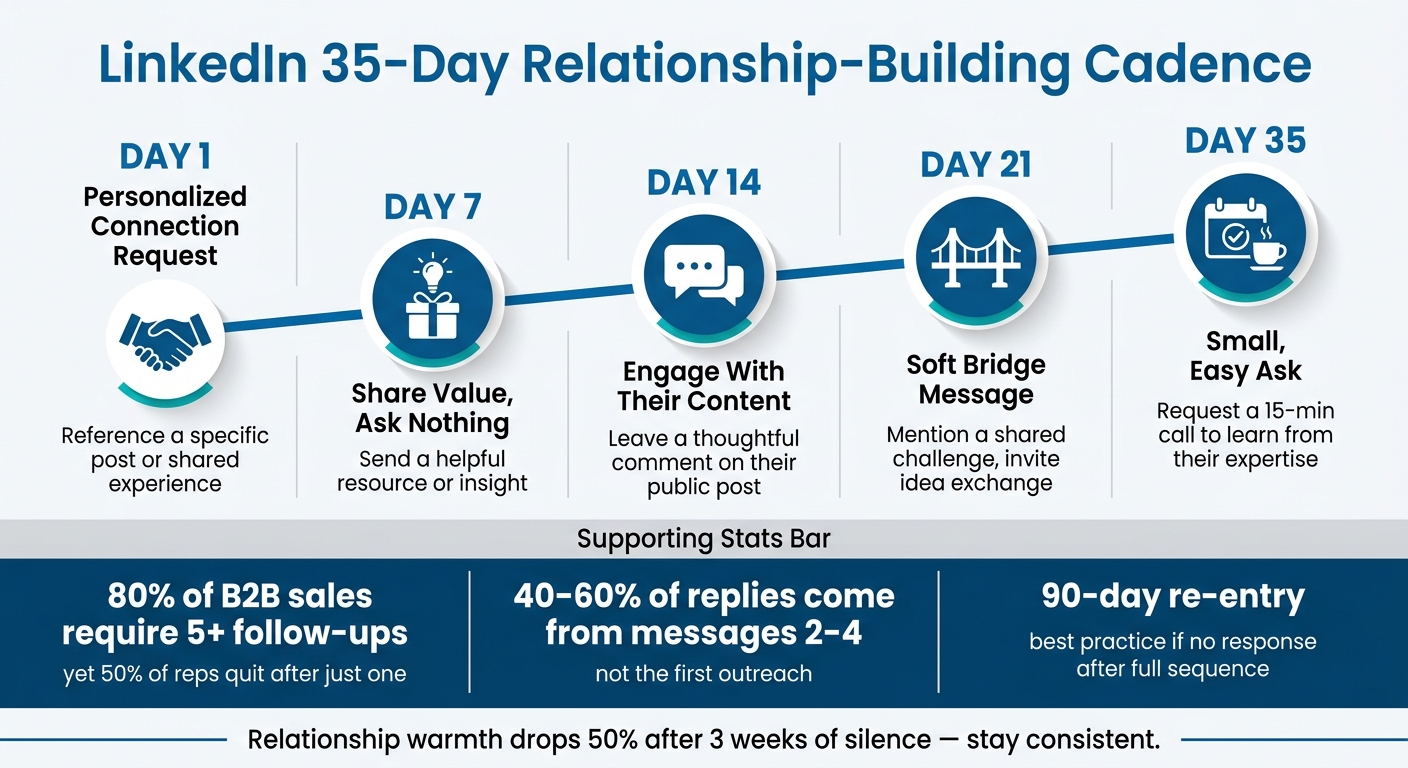
LinkedIn Relationship-Building Cadence: 35-Day Follow-Up Strategy
Getting a reply on LinkedIn is a great start, but it’s just the first step. Building long-term connections requires more than a single exchange - it’s about consistent, meaningful follow-ups. Many outreach efforts fail because people either vanish after one message or bombard their contacts with overly aggressive follow-ups. Here's a telling statistic: 80% of B2B sales need at least five follow-ups, yet nearly half of sales reps give up after just one.
How to Build a Simple Follow-Up Routine
The key to effective follow-ups isn’t persistence for the sake of it - it’s about timing and value. A 35-day cadence can help you stay consistent without coming across as overwhelming:
- Day 1: Send a personalized connection request that references a specific post or shared experience.
- Day 7: Share a helpful resource or insight without asking for anything in return.
- Day 14: Leave a thoughtful comment on one of their public posts.
- Day 21: Send a "soft bridge" message, such as mentioning a shared challenge and inviting them to exchange ideas.
- Day 35: Make a small, easy ask - like requesting a 15-minute call to learn from their expertise.
Interestingly, 40–60% of responses in successful LinkedIn sequences come from the second, third, or fourth messages. If someone doesn’t respond after the initial sequence, try a 90-day re-entry approach instead of weekly follow-ups. This keeps you visible without becoming a nuisance.
"A patient close protects trust, keeps you out of the spam bucket, and quietly positions you as the obvious option when timing finally aligns." - Charlie, Founder, Upscale
How to Lead With Value in Ongoing Conversations
Every follow-up should bring something new to the table - whether it’s a relevant statistic, an article they might find useful, or a fresh take on a topic they’ve mentioned. Think of it as balancing the "ask-offer" ratio: aim for three to five value-driven interactions for every direct request.
A simple way to maintain this balance is through the 5-5-5 weekly practice. Spend:
- 5 minutes congratulating contacts on recent achievements.
- 5 minutes offering unprompted help, like sharing resources or making introductions.
- 5 minutes following up on earlier conversations.
This routine takes just 15 minutes a week but keeps your interactions warm and engaging.
When reaching out, tie your message to timely, relevant signals - like a new post they’ve shared, a hiring surge at their company, or a recent funding announcement. This kind of signal-based outreach demonstrates that you’re paying attention rather than relying on generic templates.
Next, we’ll dive into how content and commenting can play a powerful role in strengthening these connections.
Using Content and Comments to Deepen Connections
Engaging with content - both yours and theirs - can significantly boost your visibility while fostering inbound interest. Thoughtful comments on a prospect’s posts, for example, generate notifications and profile views, often before you even send a direct message.
This is the essence of what’s called the engagement ladder. Start by commenting on a prospect’s post, then interact with more of their content, and only then move to a personalized message. This gradual approach builds familiarity and trust.
"The LinkedIn algorithm rewards conversation, not broadcasting. The more genuine replies your post generates, the wider it travels." - Richard van der Blom, LinkedIn Algorithm Researcher
Sharing your own content - whether it’s a quick insight, a curated article, or a personal story - also keeps you visible in your network’s feeds. By the time you reach out, your name won’t feel unfamiliar. That familiarity can make all the difference in turning casual interactions into lasting relationships.
Building a LinkedIn Messaging Workflow That Lasts
Having a simple, repeatable system can turn occasional LinkedIn replies into a steady flow of opportunities. The idea is to create a routine that fits seamlessly into your schedule and keeps your outreach consistent.
How to Design a Weekly Messaging Routine
Align your messaging activities with your posting schedule so each step builds on the last. For instance, posting an industry-related insight on Monday can generate engagement, giving you a list of commenters to connect with on Tuesday - one of LinkedIn's busiest days for replies.
| Day | Daily Activity |
|---|---|
| Monday | Share an industry insight; compile a lead list from commenters. |
| Tuesday | Send connection requests to Monday's commenters (high reply day). |
| Wednesday | Post a case study; follow up with connections accepted on Monday. |
| Thursday | Send connection requests to Wednesday's commenters. |
| Friday | Share a lead magnet; follow up on ongoing conversations. |
This routine keeps your outreach organized and ensures steady engagement. To protect your account, limit connection requests to 20–30 per day and direct messages to 50–80 daily. LinkedIn uses a reputation-based system, so higher acceptance rates can lead to more flexibility.
Metrics to Track Relationship Health
To understand whether your relationships are thriving or fading, keep an eye on key metrics.
"Momentum is the difference between networking and relationship building. And the data makes momentum visible." - Kolin Simon, Founder & CEO, Pursue Networking
One critical metric is your reciprocity rate - the percentage of outreach that gets a response. A rate above 70% signals strong, two-way engagement, while a rate below 40% suggests the connection might be one-sided. Additionally, aim for a connection acceptance rate of 30–45% and a message reply rate between 10–25%. Relationships tend to cool off quickly, with about 50% of their warmth fading after three weeks of silence and up to 80% after eight weeks.
| Metric | Healthy Benchmark |
|---|---|
| Connection Acceptance Rate | 30–45% |
| Message Reply Rate | 10–25% |
| Reciprocity Rate | >70% |
| Meetings Booked | 3–6 per 100 researched touches |
By tracking these metrics, you can fine-tune your workflow and maintain momentum in your relationships.
How Postelix Can Improve Your Messaging Workflow
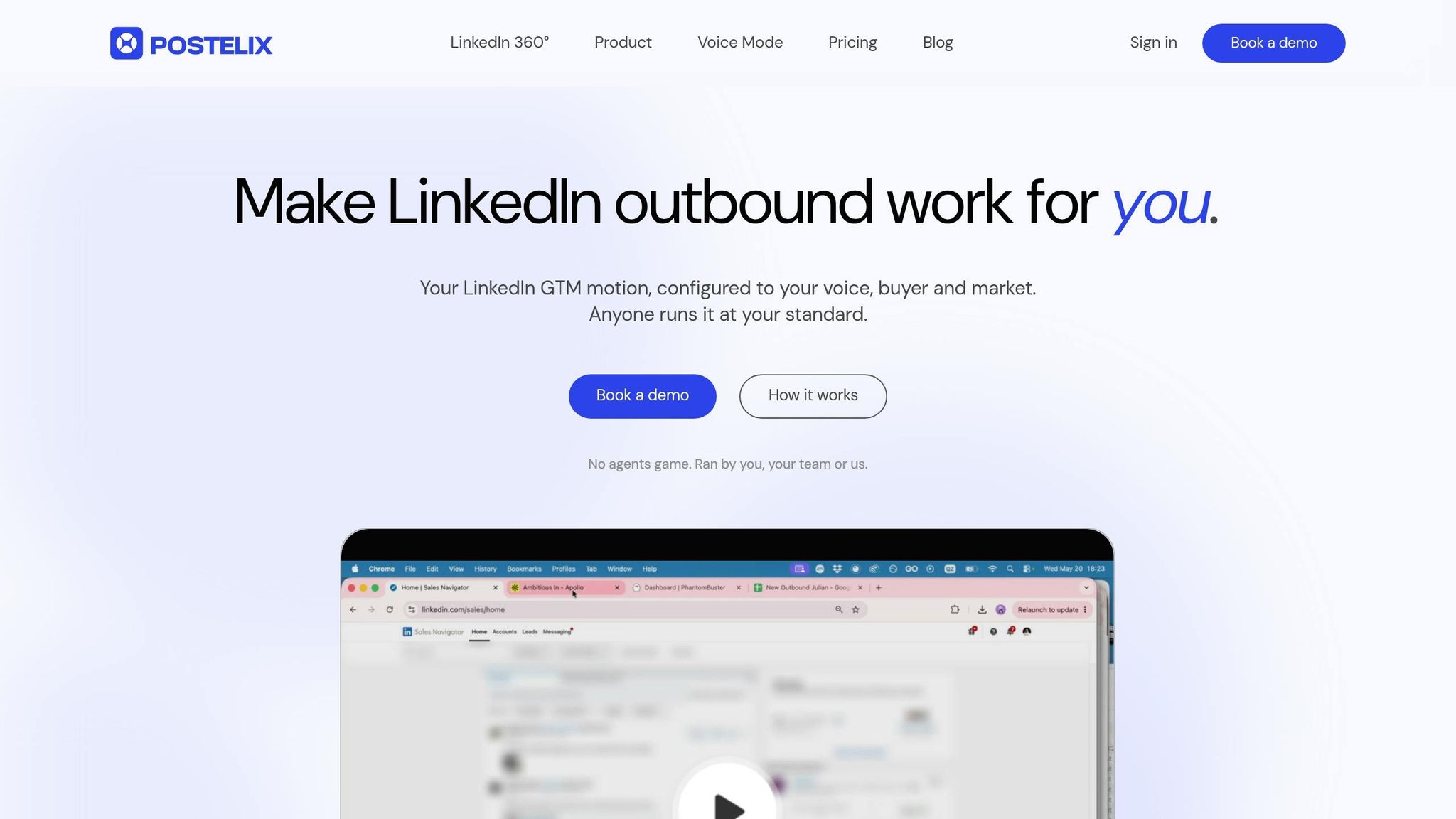
Managing 40–50 active conversations manually can be overwhelming, making it easy to miss important follow-ups. Postelix is designed to simplify this process while keeping your personal touch intact.
Its Daily Pipeline Mission provides a 15-minute routine to help you find relevant posts to engage with, identify leads showing buying intent, and draft personalized connection requests or replies based on recent activity. The tool’s DM Writer syncs with your LinkedIn inbox to create tailored messages that reflect the lead's behavior and context, rather than relying on generic templates. Plus, its Voice Mode uses your recent posts and a short voice note to ensure messages sound like you.
Every message still requires your approval, so your authentic voice is preserved. For teams, the Enterprise plan enables scaling across multiple accounts, allowing each team member to maintain their own individuality while benefiting from the streamlined system.
Conclusion: Why a Relationship-First Approach to LinkedIn Messaging Pays Off
This guide has shown how steady engagement can turn LinkedIn into a powerful tool for building meaningful professional relationships. The numbers back it up: a relationship-first strategy achieves response rates of 35–45% and close rates of 14.6%, compared to the 8–12% response rates and 1.7% close rates typical of cold outreach. These figures aren't just theory - they're reflected in real-world success stories.
Quality beats quantity every time. Take Alex, for example. According to HookTide's LinkedIn Learning Hub (March 2026), Alex managed 8,000 connections but focused on nurturing 150 key relationships. The result? $400,000 in new business, introductions to investors, and key hires for his team. Meanwhile, thousands of passive connections brought in far less measurable value.
The key is shifting your mindset. Instead of treating LinkedIn messages as mere pitches, focus on fostering authentic conversations. This approach builds trust, cuts sales cycles from 6–9 months down to 3–5 months, and boosts deal sizes by 70%. The formula is simple: warm up your outreach, offer value first, and follow up with patience. When you consistently give more than you ask, you not only build trust but also fast-track results.
FAQs
How do I “warm up” prospects without looking fake?
To genuinely connect with prospects, focus on nurturing trust and creating a sense of familiarity over time. Consistency is key - interact with their posts by reacting thoughtfully and leaving meaningful comments. When reaching out, refer to shared experiences or mutual connections to make your approach feel personal. Steer clear of generic compliments - instead, provide useful insights or ask questions that show genuine interest. Tools like Postelix can simplify this process, helping you maintain authentic, relationship-focused interactions on LinkedIn without coming across as overly aggressive or insincere.
What should I update on my profile before messaging?
Before reaching out to prospects, make sure your LinkedIn profile is set up to grab attention and build trust. Think of it as a landing page tailored to your buyers.
- Use a professional photo: First impressions matter, and a polished, approachable photo can instantly boost credibility.
- Craft a compelling headline: Go beyond your job title. Highlight how you solve problems or add value for your clients.
- Write a concise summary: Keep it under 300 words. Focus on the challenges your target audience faces, how you provide solutions, and end with a clear call to action.
- Showcase expertise with featured content: Add case studies, whitepapers, or other relevant materials to demonstrate your skills and success stories.
- Stay active: Regularly post updates, share insights, or engage with others’ content to keep your profile dynamic and visible.
By optimizing these elements, your profile becomes more than just a resume - it’s a resource that speaks directly to potential buyers.
How do I follow up 5+ times without annoying people?
Focus on providing real value in every message instead of immediately aiming for a meeting. Spread out 3–5 follow-ups over time, making sure each one offers something new - like a helpful resource or a thought-provoking question. Leverage tools such as Postelix to tailor insights and identify leads that show genuine interest. Always give recipients an easy way to opt out without pressure. If you don’t hear back after five attempts, take a break for several weeks or even months before reaching out again with a fresh perspective or updated context.