Plan B2B event marketing around your target accounts
Choose events where your target accounts are already part of the conversation.
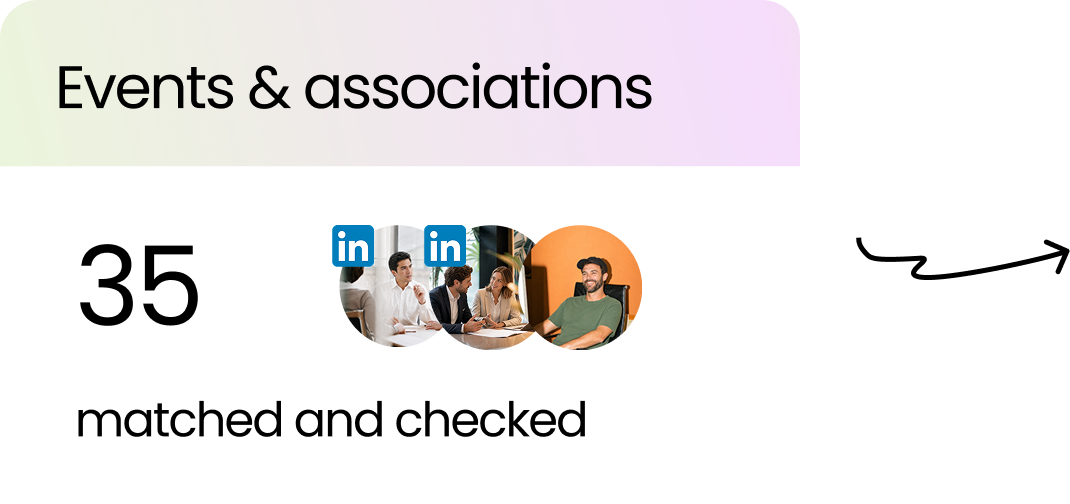
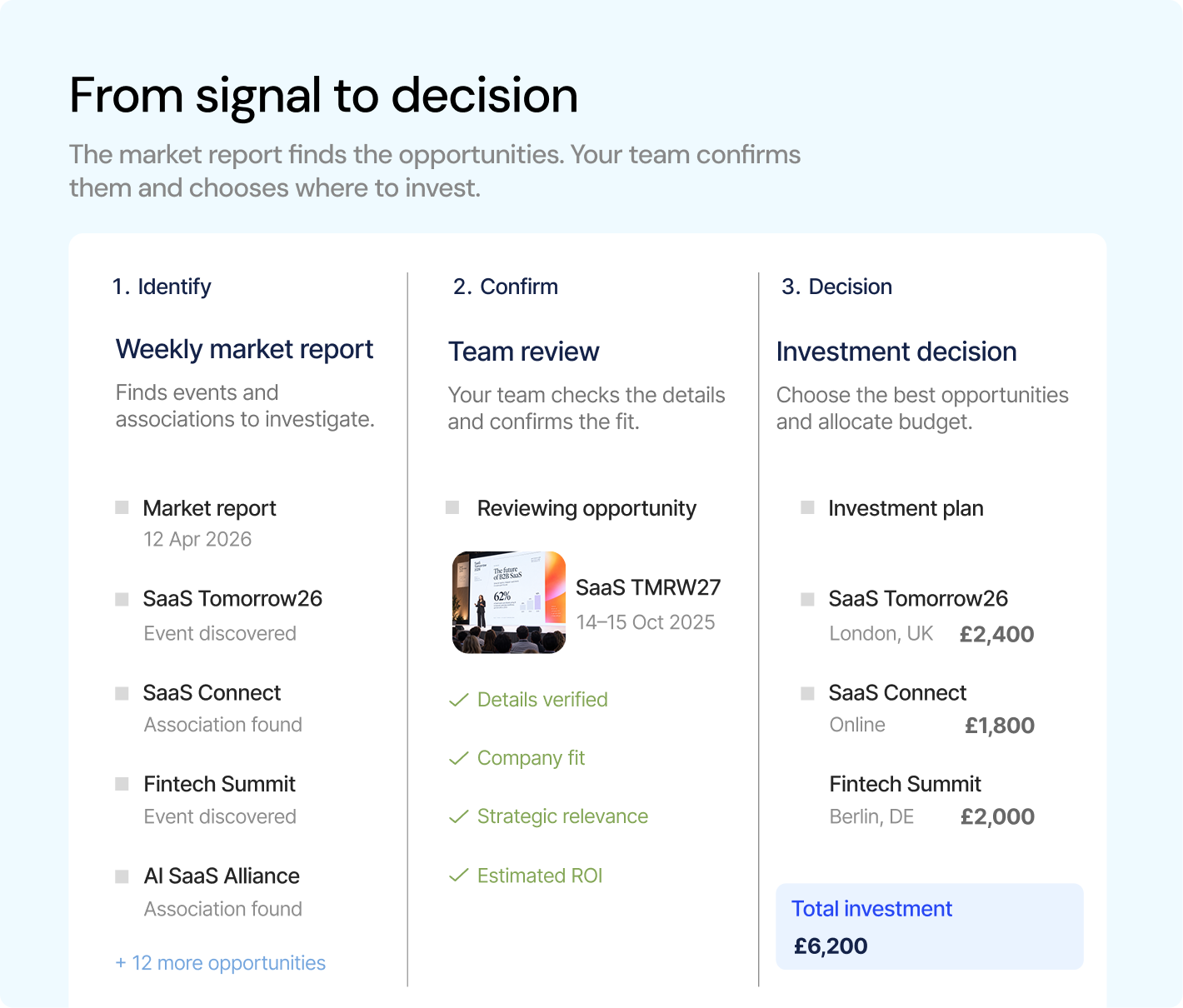
Postelix identifies conferences and associations
appearing in your market's LinkedIn activity and
checks the category calendar.
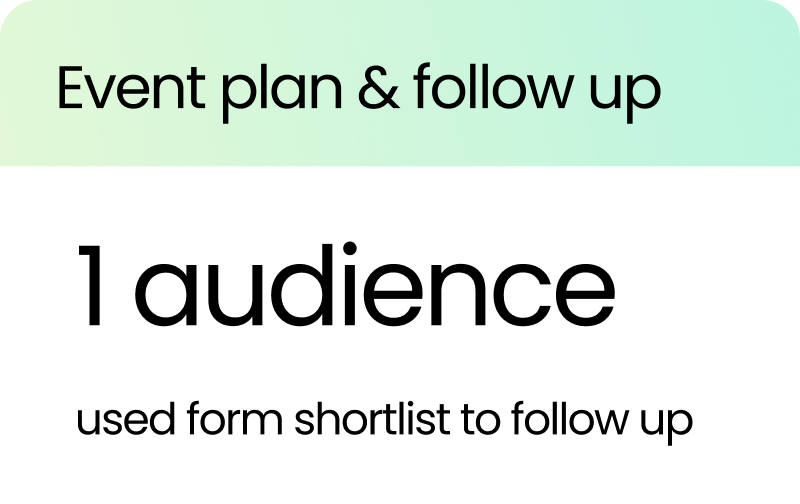
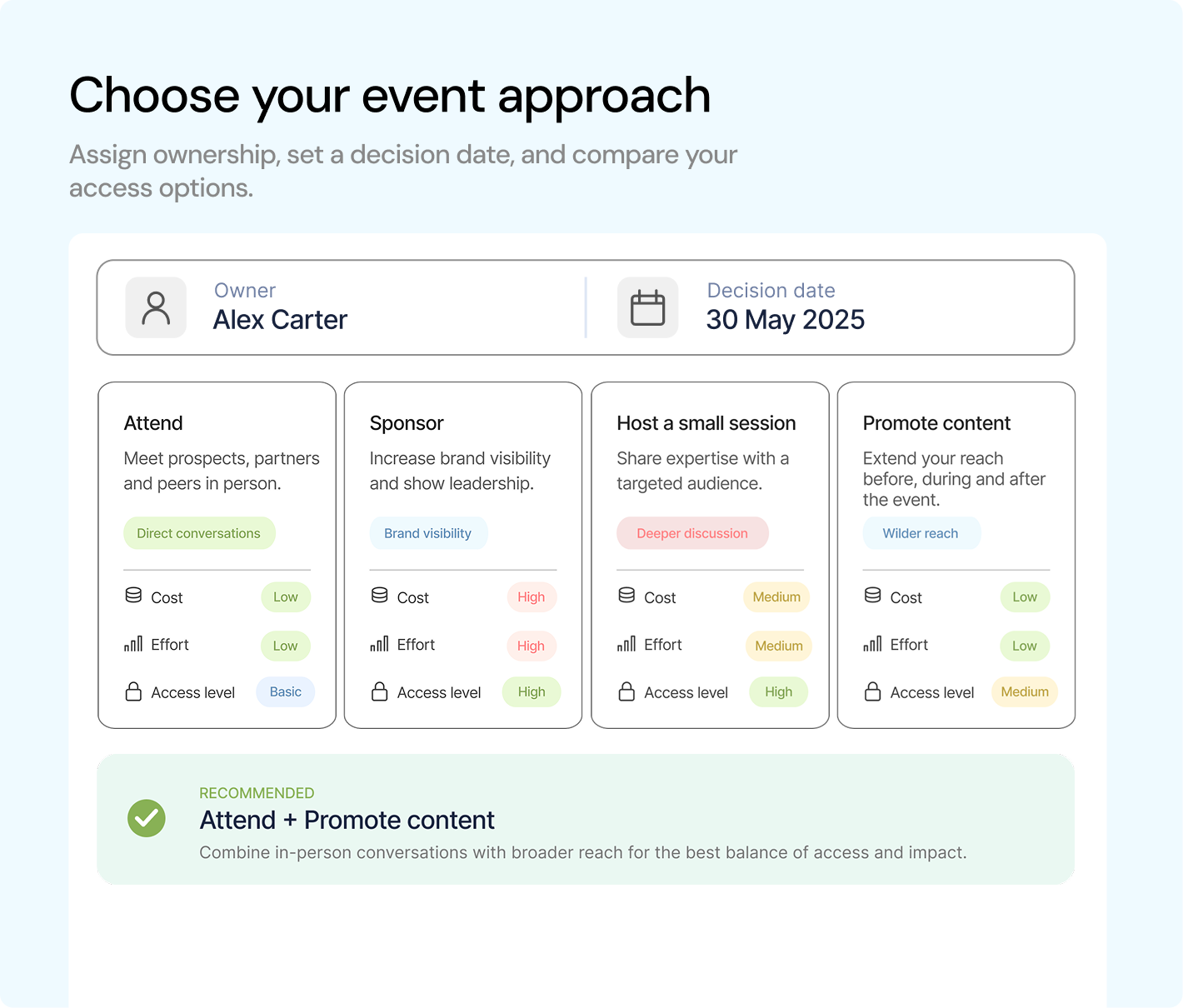
Use the shortlist to decide where to attend,
sponsor or host, then build your LinkedIn
promotion and follow-up around the same audience.
Check audience fit before committing budget
Compare the organiser's audience information with the companies and roles you want to reach. Review previous results, meeting opportunities, travel costs and the work required before and after the event.
Public LinkedIn activity adds another input: which events people discuss, which associations feature in relevant posts and which topics attract responses. Confirm dates, formats and audience details with the organiser.
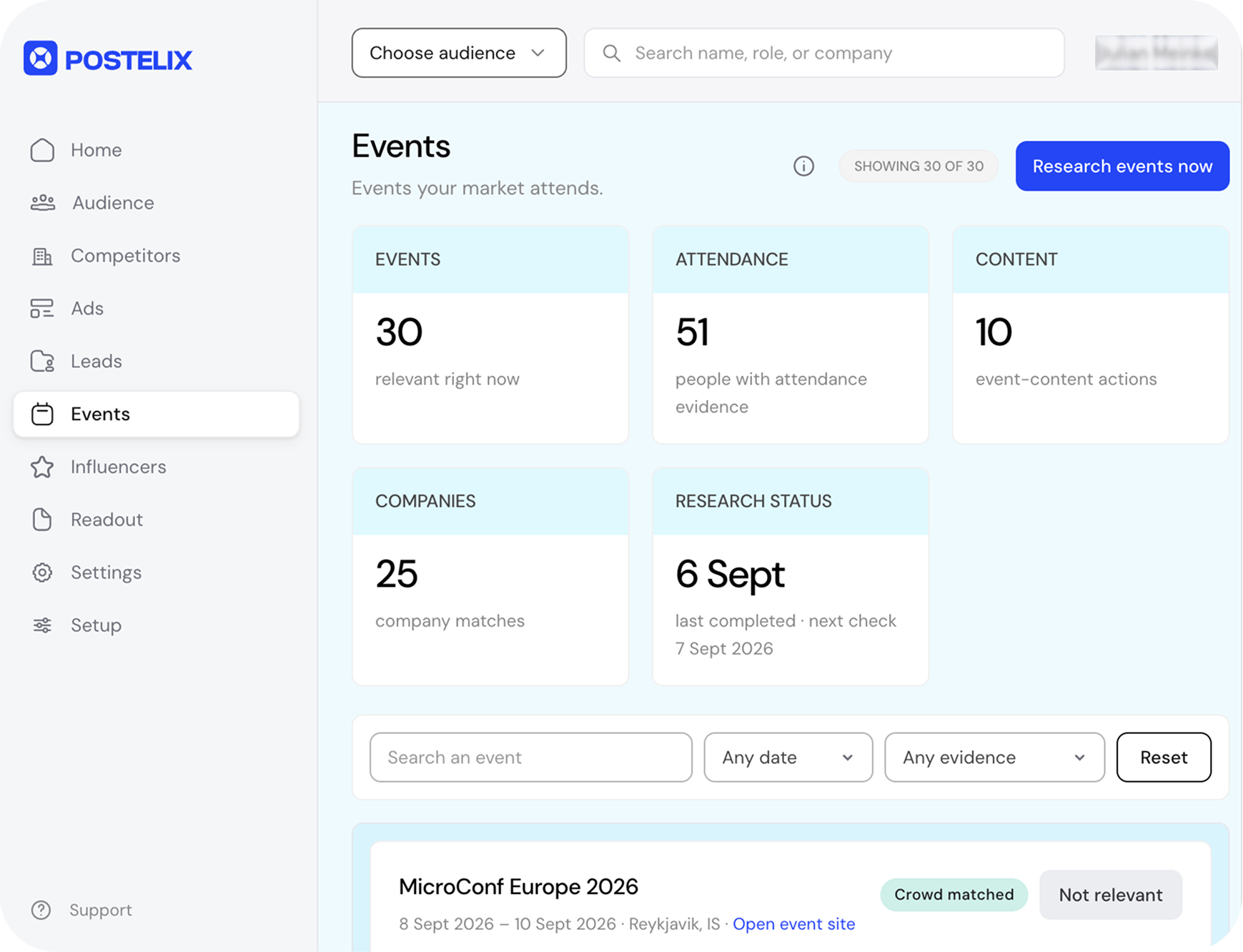
How Postelix researches relevant events
Events inside the posts
We look at the posts your market reacted to most in the window and pull out the conferences, associations, certifications and formats that appear in them.
Research on top
We check the category's calendar by hand: the associations, the certifications, the regional editions, the recurring dates.
Company level only
The output is which rooms the market gathers in, and which companies from your market sit around those rooms. Never a person level attendance claim.
Attendance only when it is explicit
If a named public post says the person is attending, that is a stated fact and we can carry it. We never infer attendance from engagement, from a follow or from a company page.
Your report brings the event, relevant companies and supporting public activity together, so your team can evaluate the opportunity.
Customer-experience communities and ecommerce events.
In an August 2026 London ecommerce customer-service sample, the research grouped 116 of 264 people with ecommerce communities and 148 with customer-experience professional communities.
That split makes both types of event worth researching. A plan focused only on ecommerce conferences could overlook relevant professional communities.
In the engagement sample, 50 of the 170 most active people engaged with the CX Professionals Association. See the market findings for the numbers and method.
A six-week LinkedIn event promotion plan.
Six weeks before
Define the companies and roles you want to reach. Publish a useful example or question about the event's subject, and measure responses from relevant people.
Four weeks before
Test an event message and destination page. If you use ads, apply the company list and role filters in Campaign Manager, check eligibility and set a budget. See LinkedIn ads audiences.
Two weeks before
Invite existing contacts where the event is relevant to your relationship. Refer to a public attendance announcement only if you have actually seen one.
During the event
Publish useful observations, answer questions and record conversations with their context. Separate confirmed attendees from people engaging with the posts online.
The following week
Follow up on the conversation or post that prompted interest. Track accepted meetings, qualified opportunities and eventual revenue alongside engagement.
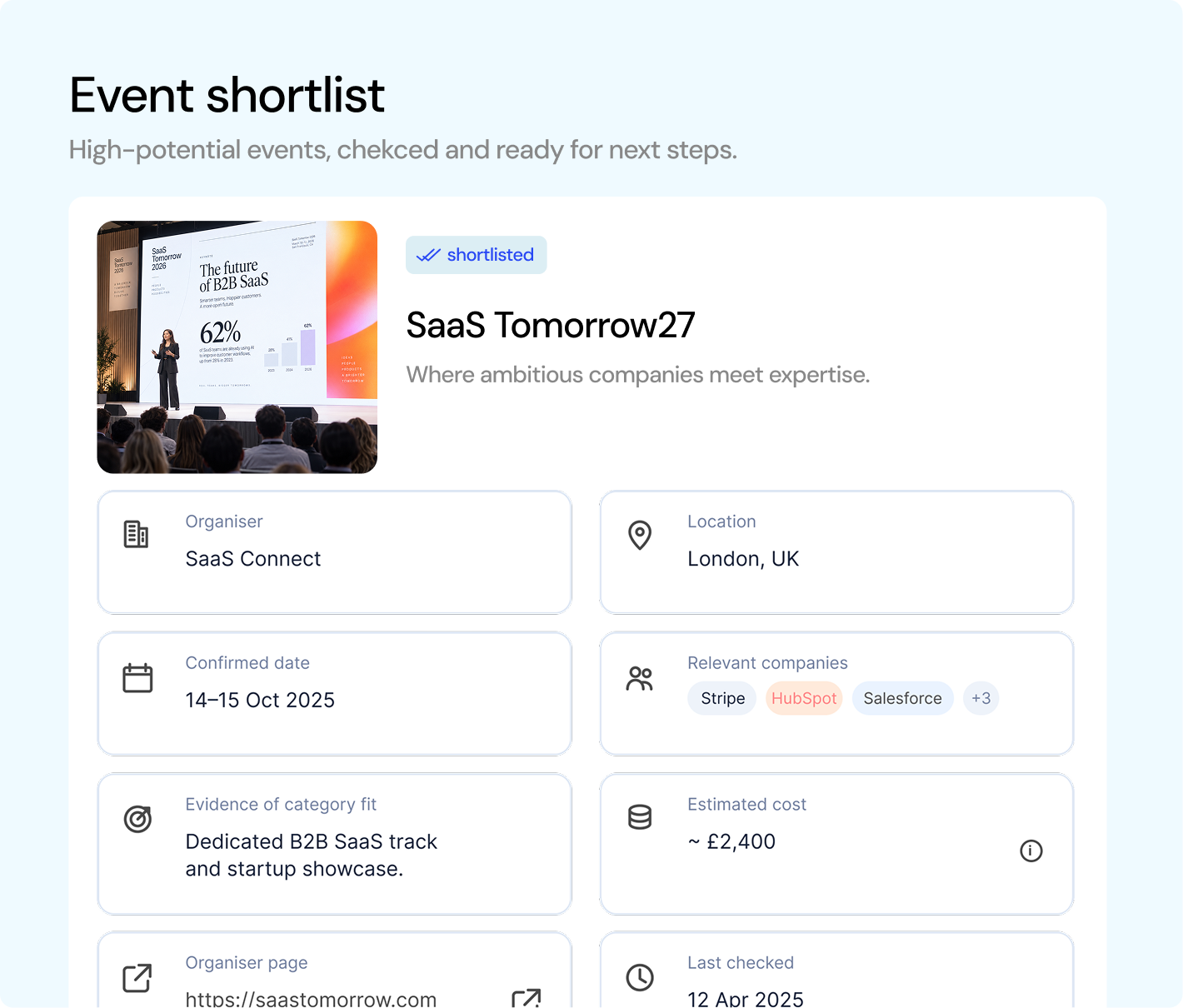
What belongs in your event shortlist.
Compare your options with the event shortlist and planning brief.
FAQs
The report identifies relevant events and companies. When someone publicly says they are attending, that adds a useful person-level detail for planning your conversations.
Combine public event mentions, organiser information and your own customer conversations. Postelix brings relevant events and companies into the market report so your team can build a focused shortlist.
Compare the full cost with the value of meetings and relationships you can reasonably develop there. Paid promotion, a smaller hosted session and attending without a booth are alternatives with different outcomes. Audience research helps assess fit, but does not establish return on investment.
Post about the topic rather than the agenda, starting around six weeks out, and test the draft against your market first. Run ads to the company list dated around the event. Reach out only to people already moving in your market, with the post as the reason rather than the badge.
Research, checked by hand against the organiser's own published information, plus whatever appears inside the posts your market engaged. We drop anything we cannot confirm from a public source rather than carrying it into a readout.
Find events relevant to your target accounts
Review the events, associations and companies appearing in your category's public LinkedIn activity.