
Most LinkedIn posts fail because they lack context. Without it, even great ideas get ignored. Context helps your content stand out, engage your audience, and drive results and LinkedIn lead generation. Here’s why it’s crucial:
- Relevance is key: Posts tailored to your audience’s challenges and goals perform better.
- LinkedIn’s algorithm prioritizes depth: Longer, focused posts increase visibility and engagement.
- Context builds trust: Posts that address specific problems attract engaged readers and potential leads.
- Avoid generic content: Vague or impersonal posts hurt your reach and credibility.
Want your LinkedIn content to succeed? Focus on understanding your audience, addressing their needs, finding the right post angles, and delivering content that sparks meaningful conversations.
The Only LinkedIn Content Strategy You Need in 2025
sbb-itb-f8f3793
What Context Means for LinkedIn Content
When it comes to LinkedIn, context is the key to turning a simple post into a meaningful conversation. It's what connects an attention-grabbing hook to a message that resonates on both a personal and professional level. Think of it as the thread that ties broad ideas to the specific challenges your audience faces. Without context, even the most intriguing opening can fall flat if it doesn’t address what really matters to your readers.
4 Types of Context to Consider
To make your LinkedIn content resonate, you need to think about these four dimensions of context:
- Audience Context: Address challenges that are specific to your readers' industry, role, or career stage. This ensures your message feels relevant and timely.
- Platform Norms: Use LinkedIn’s native tools like carousels and long-form posts to your advantage, or compare Taplio alternatives for more intent-led growth. Be cautious with external links - adding them directly into your post can reduce its reach by 40–60%.
- Timing Context: Pay attention to when your audience is most active. The first 60–90 minutes after publishing are crucial for engagement. Also, interacting with others’ posts 15–30 minutes before you publish can increase your reach by up to 20%.
- Personal Experience Context: Authenticity matters. Sharing a personal story - whether it’s a setback, a lesson learned, or a major win - builds trust far more effectively than generic corporate language.
What Happens When You Ignore Context
Skipping context can hurt both engagement and visibility. LinkedIn's algorithm evaluates posts for something called "semantic depth" (or the "Depth Score"). If your content feels generic or disconnected, it might be flagged as low-quality and pushed lower in the feed.
The numbers back this up. Between 2025 and 2026, creators who relied on generic, one-size-fits-all content saw their organic reach drop by 50%. Serge Bulaev, CEO & Founder of Co.Actor, sums it up perfectly:
"The algorithm isn't your enemy. It's a filter. It rewards content that genuinely helps people and punishes content that wastes their time."
Common Problems That Come From Missing Context
A lack of context can make even the most well-intentioned LinkedIn posts fall flat. The issue usually isn't a lack of expertise - it's that without tailoring your message, it risks becoming irrelevant. Broad, generic posts often miss the mark entirely.
Messaging That Misses Your Audience
One big mistake professionals make is aiming their content at peers instead of their actual target audience. For example, a consultant sharing insights on industry trends might impress other consultants but fail to connect with the decision-makers who hold the budget and need a compelling reason to engage.
LinkedIn users decide in seconds whether to read or scroll past your post. If your opening line doesn’t grab the right person’s attention immediately, your message is lost. Openers like "I'm excited to share..." often come across as corporate fluff and lead to instant scrolling. On the other hand, a specific and intriguing hook - like "We lost a $2.3M deal because of this one overlooked detail" - can boost engagement by up to 38%.
The problem doesn’t stop at vague messaging. Over-relying on generic formats can further erode authenticity, leaving your audience feeling disconnected.
Generic Content That Feels Impersonal
Using viral templates or AI-generated frameworks might seem like a shortcut, but it often results in what Junaid Khalid, author at LiGo Social, calls unoriginal content - technically fine but forgettable.
"Generic posts might generate engagement metrics, but they generate shallow engagement from people who will forget your name by tomorrow. Personalized content creates connection, and connection drives real business results." - Madhawa Adipola, Founder, AudienceMx
If your content feels interchangeable - if removing your name wouldn’t make a difference - it’s too impersonal. This kind of generic posting can commoditize your personal brand, making it harder to stand out in a crowded space.
Staying Out of Current Conversations
Another pitfall is failing to tie your content to ongoing industry discussions. Posts that don’t address current challenges or trending topics can feel out of touch, as if they’re stuck in the past.
How Contextual Content Improves LinkedIn Performance
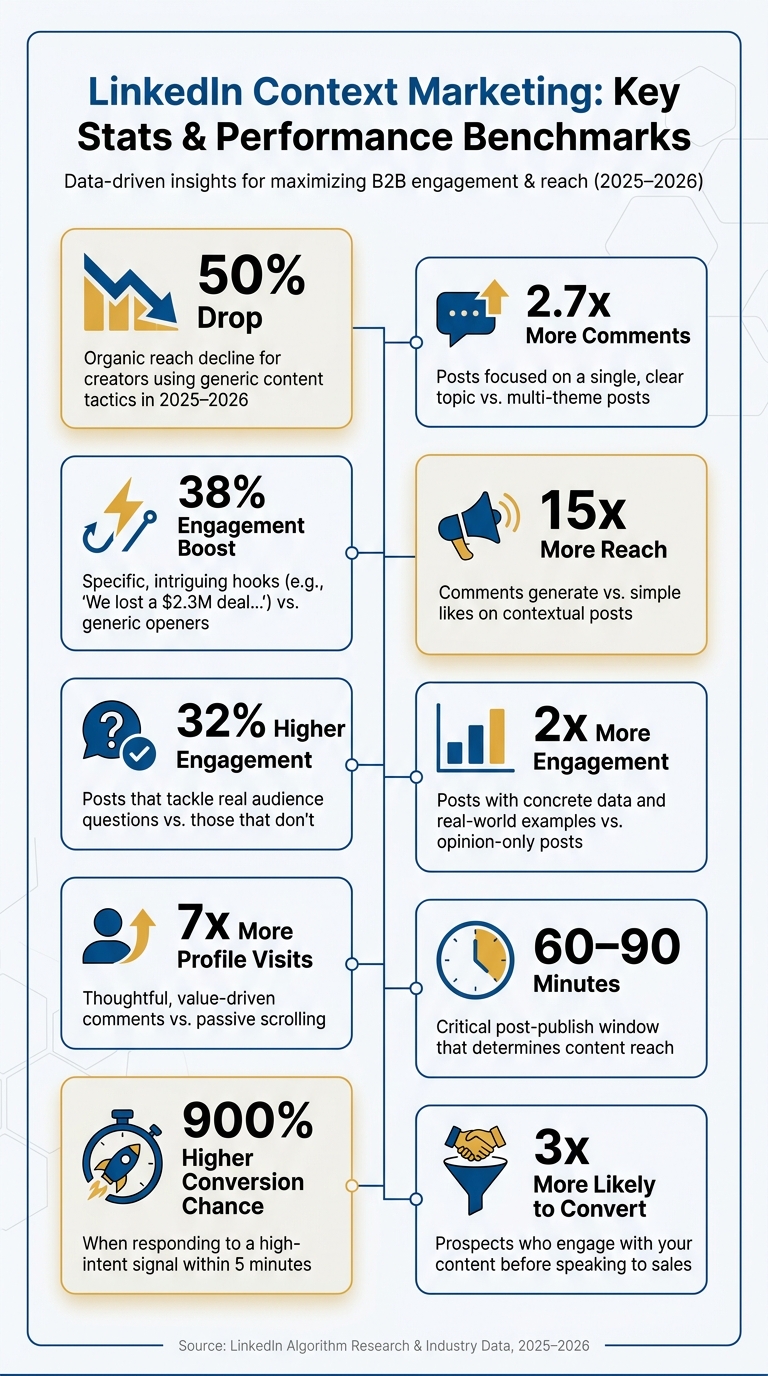
LinkedIn Context Marketing: Key Stats & Performance Benchmarks
Creating posts that directly address your audience's needs can lead to quick and measurable success on LinkedIn. In 2026, posts that align with the challenges and interests of your audience consistently outperform those that lack focus or relevance.
More Relevant, Personalized Posts
When content feels tailored, it grabs attention for longer periods. LinkedIn’s algorithm prioritizes this "dwell time", making it a key factor in how posts are ranked. Posts that stick to a single, clear idea also tend to perform better - those focused on one topic receive 2.7 times more comments compared to posts that try to juggle multiple themes.
Building Credibility and Authority
Contextual content does more than just boost engagement; it builds trust over time. LinkedIn's 2026 algorithm now evaluates a post’s "Depth Score", which measures how relevant the content is and the quality of the discussions it sparks. Posts that are too generic or only generate surface-level interactions are deprioritized. On the other hand, stories rooted in real experiences and specific insights are more likely to reach a wider audience.
"LinkedIn isn't a social media platform - it's a business relationship platform. Your content strategy should prioritize relationship building and business impact over viral reach." - LinkIntel
Attracting Leads Who Are Ready to Engage
The right kind of content doesn’t just increase your visibility - it attracts the right people. While about 70% of LinkedIn users are passive "ghost scrollers" who read without interacting, high-context posts can turn these silent observers into active participants. A thoughtful comment on a targeted post often reveals genuine interest, providing valuable insights into potential buyers' challenges and enabling more focused follow-ups.
Additionally, comments on contextual posts create a ripple effect: they generate 15 times more reach than simple likes. Each meaningful reply becomes an opportunity to extend your message further, transforming LinkedIn into a powerful inbound marketing tool. This underscores why context is the cornerstone of any successful LinkedIn strategy.
How to Add Context to Your LinkedIn Content
Adding context to your LinkedIn posts doesn’t have to be complicated. A few intentional practices can make your content more relevant and engaging.
Define Your Audience and Their Challenges
Start by narrowing down your audience. While job titles and industries are helpful, they don’t reveal the real struggles people face. Instead, focus on specific problems. For example, rather than targeting "B2B marketers", think about "people dealing with inconsistent LinkedIn engagement."
Once you’ve identified your audience, dig into their frustrations. What inefficiencies or doubts keep popping up in sales calls, DMs, or conversations at industry events? Diandra Escobar, Founder of Distinctiva.io, explains it best:
"People feel problems before they can name them. That's your content sweet spot."
Here’s a practical tip: browse the comment sections on posts from influential voices in your field. You’ll uncover recurring questions and pain points that your content can address. Posts that tackle real audience questions tend to see 32% higher engagement than those that don’t. Use these insights to craft a library of ideas that speak directly to your audience.
Build a Content Library Based on Audience Insights
A content library is essentially a collection of the language and concerns your audience uses. Gather data from sales calls, support tickets, and common objections to build this resource.
"Your audience already wrote your content strategy, you just haven't read it yet." - Charlie Grinnell, CEO, RightMetric
Structure your library around 3–5 key themes that align your expertise with their challenges. This keeps your content focused and prevents you from running out of ideas. For each topic, include one statistic, one real-world example, and one counterargument. Posts with concrete data and examples get 2x more engagement than those based solely on opinions.
Tools like Postelix can simplify this process. Its Source Library feature lets you store up to 30 documents, such as client insights, case studies, and research, ensuring your AI-generated posts are rooted in real-world context instead of generic advice.
Develop a Recognizable Tone and Voice
Once you’ve nailed your audience and organized your insights, focus on crafting a consistent tone. Your tone is what makes your posts stand out. Without it, even well-researched content can feel bland. Start by choosing 3–5 adjectives that define your voice - for example, direct, empathetic, data-driven, or contrarian - and use these as a guide for your writing.
Write as if you’re speaking to a knowledgeable colleague. Keep your tone conversational by using contractions and posing questions. Skip the corporate jargon. Remember, the first two lines of your post determine 80% of its performance, so make them clear, engaging, and directly tied to what your audience cares about most.
Using Context to Find and Engage Warm Leads
Context doesn’t just enhance engagement - it’s your secret weapon for identifying warm leads who are ready to take action. By understanding the signals your audience leaves behind, you can turn passive interest into meaningful conversations. On LinkedIn, users often drop hints when they’re actively researching solutions. The real challenge? Knowing how to spot these signals and respond effectively.
Spotting High-Intent Signals
Not every interaction signals buying intent. For example, a simple "like" is easy to overlook, but a detailed comment? That’s where the gold lies.
"A high-intent buyer is actively researching and evaluating solutions - essentially, a digital hand-raise." - SnitchFeed
In 2026, LinkedIn's algorithm gives comments 15x more weight than likes. Look for phrases like "We’re evaluating", "Looking for recommendations", or "Need tools for" - these are clear signs someone is exploring solutions. Multiple profile views are another strong indicator of interest.
Here’s a quick guide to interpreting and acting on these signals:
| Signal Type | Intent Strength | Recommended Action |
|---|---|---|
| Post Like | Low | Monitor for repeat behavior |
| Profile View | Medium | Check if they fit your ICP; engage if repeat views occur |
| Detailed Comment | High | Respond within 1 hour; move the conversation to DMs |
| Solution Inquiry | Very High | Reach out immediately with a personalized message |
| Multi-Stakeholder Engagement | Critical | Identify the buying committee; start account-based outreach |
Timing is everything. Responding within 5 minutes can increase your chances of conversion by 900%. Plus, prospects who engage with your content before speaking to sales are 3x more likely to convert. This makes quick, tailored follow-ups essential.
Joining Conversations That Matter to Your Audience
Don’t wait for leads to come to you - join the discussions they’re already having. A helpful framework is the 70/20/10 rule: dedicate 70% of your commenting on posts by large industry creators, 20% to engaging directly with your ideal prospects, and 10% to posts with a clear call-to-action.
When you comment, make it count. LinkedIn’s algorithm prioritizes thoughtful, value-driven insights over generic remarks like "Great post!". A strong comment should:
- Reference specific details from the post.
- Share your own relevant insights or experiences.
- End with a question to spark further conversation.
This approach can drive up to 7x more profile visits compared to passive scrolling.
Another overlooked strategy? Engaging with nano-creators - those with 1,000–10,000 connections. These smaller networks often have 5x the engagement rates of larger accounts, so a well-placed comment can have a big impact.
Using Tools to Put Context Into Practice
Managing all this manually can be overwhelming, but tools like Postelix simplify the process. Postelix uses intent-based lead discovery to surface prospects actively signaling interest.
Its 24/7 Hot Lead Agent (available on the Pipeline plan) monitors high-intent activity, delivering a real-time feed of warm leads - up to 25–50 per day - based on keywords and competitor accounts you track.
For outreach, Postelix’s AI-generated comments are designed to be context-rich and human-like, ensuring your engagement feels meaningful. When it’s time to take the conversation to DMs, the built-in DM Writer Assistant helps you craft personalized messages that reference the specific post or comment that sparked the connection. This kind of tailored outreach can build rapport quickly and effectively.
Conclusion: Context Is the Foundation of LinkedIn Success
In 2026, LinkedIn places a premium on relevance. The platform focuses on quality over quantity - what you share must resonate deeply with your audience.
Key Takeaways
Here’s a quick summary of the most critical points:
- Organic reach for creators using generic engagement tactics has dropped by 50% in 2026, and this trend is only picking up speed.
- Comments that are contextual and thoughtful lead to up to 7x more profile visits compared to generic replies.
- Posts with more detail and depth consistently outperform shallow or vague content.
The takeaway is simple: depth matters more than sheer volume, and specificity outweighs posting frequency. Timing also plays a crucial role - the first 60–90 minutes after posting are when your content’s reach is largely determined.
"The LinkedIn algorithm rewards conversation, not broadcasting. The more genuine replies your post generates, the wider it travels." - Richard van der Blom, LinkedIn Algorithm Researcher
Now that you see the power of context, let’s talk about how to apply it.
Your Next Steps
To make the most of these strategies, start small but deliberately. Before your next post, spend about 15–20 minutes leaving thoughtful, specific comments on posts that your target audience is already engaging with. Then, craft your own post around a single compelling idea, ensuring it’s formatted for mobile and includes an attention-grabbing hook to get readers to click "see more."
For added efficiency, tools like Postelix can help you put these strategies into practice. From identifying warm leads based on intent signals to generating personalized, context-aware comments, tools like this make it easier to turn these insights into a sustainable daily routine.
Context isn’t just another content strategy - it’s the bedrock for everything you do on LinkedIn. Focus on it, and you’ll see the difference.
FAQs
How do I figure out my audience’s real LinkedIn pain points?
To truly connect with your audience on LinkedIn, start by digging into their real challenges. Go beyond the obvious and focus on the deeper issues they face. This requires thorough research and a genuine effort to understand their needs. Once you’ve identified these pain points, create content that speaks directly to them. Posts that address specific problems and provide practical solutions will not only grab attention but also spark meaningful conversations and build trust with your audience.
What’s the fastest way to add more context without making posts too long?
The fastest way to give context to LinkedIn posts without overwhelming your audience is by prioritizing specificity and relevance right from the start. Begin with clear, actionable details or results that immediately capture attention. A compelling hook that directly ties to your main point or poses a thought-provoking question can set the stage effectively, keeping your post concise yet engaging.
How can I turn comments and profile views into warm leads on LinkedIn?
To transform comments and profile views into potential leads, focus on engaging strategically to create real connections. Leaving thoughtful, relevant comments on posts within your niche not only increases your visibility but also strengthens your credibility. When people comment on your posts, respond with meaningful replies to keep the conversation going.
If someone views your profile, consider reaching out with a personalized message, especially if their activity suggests they might be interested in what you offer. Tools like Postelix can assist in spotting warm leads and crafting tailored comments, helping you build trust and foster genuine interactions.