
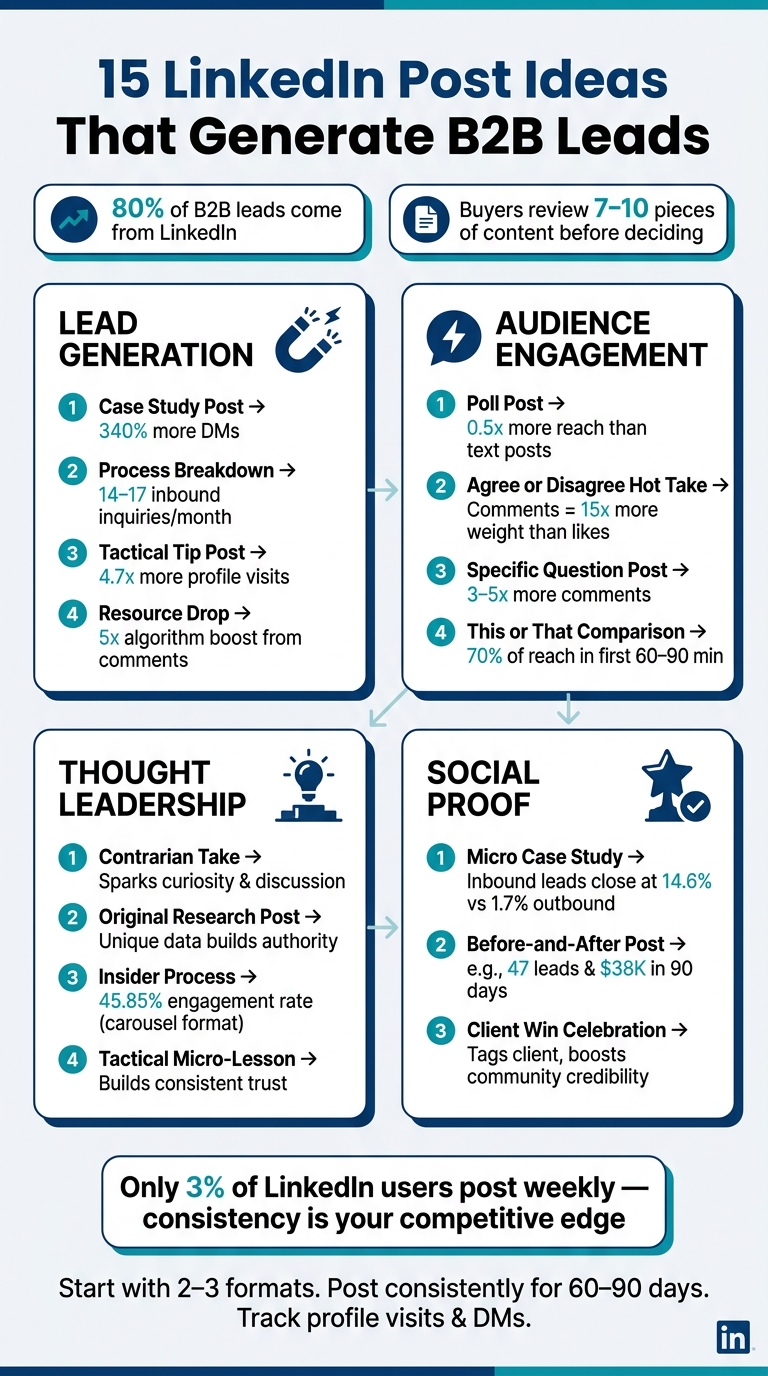
LinkedIn is a powerful platform for B2B professionals, with 80% of B2B leads coming from it and buyers reviewing 7–10 pieces of content before deciding. The challenge? Knowing what to post. This guide offers 15 LinkedIn post ideas across four categories to help you generate LinkedIn reach and leads, build trust, and engage your audience.
Key Ideas:
- Lead Generation Posts: Case studies, process breakdowns, actionable tips, and free resources.
- Audience Engagement Posts: Polls, bold opinions, targeted questions, and comparisons.
- Thought Leadership Posts: Contrarian takes, original research, insider methods, and micro-lessons.
- Social Proof Posts: Success stories, before-and-after results, and client celebrations.
Why It Works:
- Posts focusing on solving problems and sparking conversations outperform self-promotion.
- LinkedIn’s algorithm favors comments over likes, boosting visibility for engaging content.
- Consistency matters: only 3% of users post weekly, giving you a chance to stand out.
Start small by choosing 2–3 formats, post regularly for 60–90 days, and track what drives profile visits and inquiries. For more advanced results, consider using a LinkedIn lead generation tool to identify intent signals.
15 LinkedIn Post Ideas That Generate B2B Leads
9 Easy Ways to Find UNLIMITED Linkedin Content Ideas that get leads
sbb-itb-f8f3793
1. Lead Generation
These four types of posts are designed to turn casual scrollers into engaged prospects. The secret? Focus on solving the reader's problems instead of showcasing your own achievements.
- The Results-Focused Case Study
Showcase a real client success story with measurable results. For example: "We helped a SaaS company boost demo bookings by 327% in just 60 days using X strategy." This approach builds trust and credibility. Data from 2026 shows that case study posts drive 340% more direct messages and 67% more comments compared to generic updates. Use a simple Problem/Solution framework: outline the challenge, explain the action taken, and highlight the outcome.
- The Process Breakdown
Break down your process step by step. This reassures potential clients by showing your methods are structured and repeatable. For instance, a B2B software agency that shifted its focus from general thought leadership to detailed process posts saw monthly inbound inquiries jump from 2–3 to 14–17. They also secured 4 new clients worth $218,000 in annual contracts.
- The Tactical Tip Post
Share one actionable tip your audience can implement immediately. This builds trust faster than any self-promotion ever could. Educational posts generate 4.7x more profile visits and inquiries than promotional ones. Be specific - swap generic phrases like "improved results" for concrete outcomes like "reduced onboarding time by 40% in 3 weeks".
- The Resource Drop
Offer a valuable freebie, like a checklist or template, and ask readers to comment a keyword to receive it via DM. This low-effort interaction helps identify warm leads. Plus, LinkedIn’s 2026 algorithm favors comments 5x more than likes, meaning your post will reach a larger audience.
These posts don’t just generate leads - they create opportunities for deeper engagement, setting the stage for more meaningful connections.
2. Audience Engagement
Getting likes is simple, but sparking real engagement? That’s where lead generation happens. Posts that encourage interaction can turn passive scrollers into active participants. Here are four types of posts designed to ignite conversation and bring your audience into the fold.
- The Poll Post
A straightforward, two-option question tied to an industry topic can work wonders. LinkedIn polls, for instance, generate 0.5x more reach than standard text posts. Why? They’re quick and easy to answer. To maximize impact, drop your own answer in the comments right after posting. This sets the tone and encourages others to chime in.
- The "Agree or Disagree" Hot Take
Bold statements spark discussions. As copywriter Jasmin Alic explains:
"Agreeable content gets likes. Disagreeable content gets comments. And comments are what the algorithm wants."
Comments weigh about 15x more in LinkedIn’s algorithm than reactions. A post that invites debate can go much further than one that simply collects likes.
- The Specific Question Post
Ask something targeted, like, “What’s been the most unexpected source of leads for your business this year?” Specific questions like this generate 3–5x more comments compared to vague prompts. More detailed responses also signal LinkedIn’s algorithm to prioritize your post, as it values meaningful engagement and dwell time over quick reactions.
- The "This or That" Comparison
Lay out two opposing strategies and ask your audience to pick a side. This format naturally sparks debate and follow-up discussions in the comments. To keep the momentum alive, engage with every comment in the first 60–90 minutes after posting. That short window can account for up to 70% of your post’s total reach.
3. Thought Leadership
Targeted posts can grab attention and generate leads, but thought leadership is what transforms interest into trust. These types of posts don’t just enhance your reputation - they help guide buyers toward making decisions. In fact, 73% of B2B decision-makers say thought leadership is a better way to evaluate a company's expertise than product sheets. By sharing authoritative insights, you’re not just starting conversations; you’re building credibility. Below are four types of posts designed to establish that kind of trust.
- The Contrarian Take
Take a stance against a widely accepted industry belief - but make sure you back it up with solid data. Posts that challenge the norm naturally spark curiosity and invite discussion, signaling that you’re bringing fresh ideas to the table. The key? A strong, attention-grabbing hook in the first two lines. It should create a “curiosity gap” that makes readers want to click "see more."
- The Original Research Post
Highlight an important insight from your own data. Whether it’s from a small survey or patterns you’ve noticed with clients, sharing unique findings can make a big impact. For example, McKinsey’s freely available "State of AI Report" (March 2025), based on input from 1,491 participants, became a go-to resource in its field. You don’t need McKinsey-level resources - one specific, honest data point from your own work can add real value.
- The Insider Process
Share details about a unique system or method you use, like a client discovery framework. This approach showcases your expertise and reassures potential buyers by showing them a clear, repeatable path to success. Formats like carousel or document posts are particularly effective here, boasting an impressive 45.85% engagement rate, the highest of any LinkedIn format.
- The Tactical Micro-Lesson
Provide your audience with one actionable tip they can apply right away. Joe Chernov of Pendo highlights that consistent, practical advice is key to building trust over time. By regularly delivering insights that people can act on, you’re creating a steady stream of value that keeps your audience coming back for more.
4. Social Proof
Once you've demonstrated your expertise, the next step is to build trust by showcasing real client results. Social proof transforms credibility into action. When potential clients see tangible outcomes, they’re far more likely to engage. This is reflected in the numbers: inbound leads close at an impressive 14.6%, compared to just 1.7% for outbound methods. Incorporating these social proof strategies into your content can significantly boost conversions. Below are three post types that highlight your results effectively.
- The Micro Case Study
This type of post uses a straightforward Challenge → Solution → Outcome format, but the key is to keep the entire story within the post itself. Why? Because the 2026 LinkedIn algorithm discourages posts that direct users off-platform, so sharing the full story in the feed is both practical and impactful. Start strong with your most impressive metric. For instance, a headline like "How we increased our pipeline by 40% in 90 days" instantly grabs attention. Focus the majority of the post - about 80% - on the problem and the strategy used to solve it, rather than overly promoting your service.
"Case studies are compelling proof that other B2B buyers were satisfied after purchasing a product or service." - LinkedIn Marketing Solutions
- The Before-and-After Post
This approach highlights client progress with specific metrics and timeframes. For example, between late 2025 and early 2026, a fractional CMO named Sarah transitioned from cold outreach to an inbound LinkedIn strategy. Over 90 days of consistent posting that combined storytelling with framework-driven content, she attracted 47 inbound leads and closed 3 deals totaling $38,000. These clear, measurable results help prospects envision themselves achieving similar success.
- The Client Win Celebration
Here, the focus shifts to celebrating your client’s achievements. Tag them in the post and let their success take center stage. This not only builds a sense of community but also serves as powerful social proof. Interestingly, keeping the spotlight on their win rather than your role in it enhances your credibility. Wrap up the post with a light question like "What’s been your biggest win this quarter?" to encourage meaningful comments. In 2026, LinkedIn’s algorithm values comments 15x more than likes, making this a smart way to boost engagement.
Conclusion
Using actionable post ideas and these strategies can elevate your LinkedIn game. Generating leads on the platform isn’t about posting more - it’s about posting smarter. The 15 post ideas shared here - covering lead generation, audience engagement, thought leadership, and social proof - highlight how focused content can deliver tangible results. But remember, no single type of post will do the trick on its own. A balanced mix is key.
Instead of casting a wide net, aim your content directly at your buyers. As Nicolas Lecocq, Founder of LinkedGrow, explains:
"The best lead-gen posts often get moderate engagement precisely because they speak to a narrower, more targeted audience rather than trying to appeal to everyone."
Prioritize creating posts that spark real conversations and inquiries over chasing likes and shares. Start by choosing two or three formats that match your style, then stick with them consistently for 60–90 days. Pay attention to which posts drive profile visits and direct messages. For instance, Junaid Khalid’s B2B software agency followed this approach and saw impressive results - growing inbound inquiries from 2–3 per month to 14–17, and closing $218,000 in new contracts within 90 days in early 2026.
Here’s another stat to consider: only 3% of LinkedIn users post weekly. This means consistent, high-quality content has a real chance to stand out. Stick with these strategies, and you’ll start seeing measurable results.
FAQs
How do I pick the best 2–3 LinkedIn post formats for my audience?
When deciding on LinkedIn post formats, it's essential to focus on those that not only encourage engagement but also help generate leads, especially in B2B settings. Here are some formats that work particularly well:
- Tackle pain points: Share case studies or break down processes that address your audience's challenges. This demonstrates your expertise and builds credibility.
- Spark curiosity: Post content that offers surprising or counterintuitive insights to grab attention and encourage interaction.
- Go interactive: Use formats like polls or carousels to engage your audience directly. These are great tools for building trust and capturing leads.
Always choose formats that resonate with your audience’s preferences and needs.
What should I track to know if my LinkedIn posts are generating leads?
Tracking whether your LinkedIn posts are pulling in leads? Start by keeping an eye on Lead Gen Form performance in Campaign Manager. This includes metrics like how many leads are downloading your content and actual conversion rates.
Don’t stop there - check out engagement metrics too. Look at clicks, comments, shares, and your overall engagement rate. These numbers give you a clear picture of how your audience is interacting with your posts and how effective they might be at generating leads.
How do I offer a free resource in comments without sounding spammy?
To share a free resource in comments without coming off as spammy, focus on being helpful and authentic. Frame the resource as a solution to a specific problem that aligns with the post's topic. For example, you could say something like, “I have a guide that might help with this - just comment VIRAL, and I’ll send it to you via DM.”
Make sure your comment fits naturally within the conversation and feels relevant to the audience. The key is to prioritize value and keep the tone conversational, so it doesn’t feel overly promotional.