
Intent-based messaging outperforms generic outreach on LinkedIn. Why? It focuses on timing and relevance, triggered by buyer actions like funding announcements or content engagement. Generic outreach, on the other hand, relies on mass, templated messages with low personalization, often ignored by recipients.
Key differences:
- Reply rates: Intent-based (15–30%) vs. Generic (1–3%).
- Meeting conversion: Intent-based (8.7%) vs. Generic (1.2%).
- Approach: Intent-based aligns with buyer behavior; Generic relies on volume.
Quick Comparison
| Factor | Intent-Based Messaging | Generic Outreach |
|---|---|---|
| Trigger | Buyer actions (e.g., job changes) | Static lists or templates |
| Reply Rate | 15–30% | 1–3% |
| Meeting Conversion | 8.7% | 1.2% |
| Focus | Timing and relevance | Quantity and automation |
| Risk | Low | High (spam flags, reputation) |
Intent-based messaging is ideal for meaningful engagement and long-term results, while generic outreach struggles to deliver value, leading many to compare Postelix vs Taplio for more effective, intent-led growth.
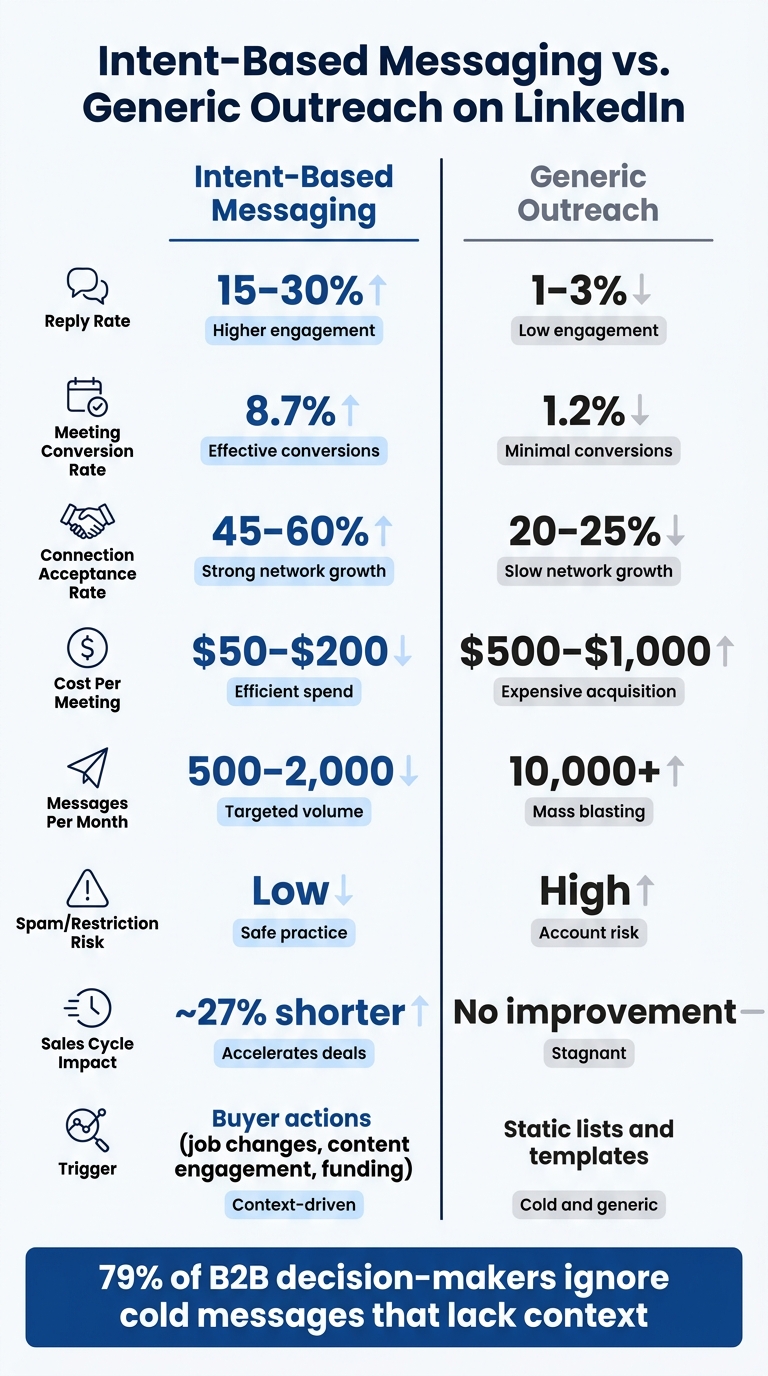
Intent-Based Messaging vs. Generic Outreach: Key Stats & Differences
How Intent-Based Messaging Works on LinkedIn
Core Principles of Intent-Based Messaging
Intent-based messaging is all about timing over generic profiling. As Matt Anderson, Co-founder of ProspectZero, explains:
"Timing beats copy every time. Always has."
This idea shifts the focus from asking, "Who fits our ideal customer profile?" to a more dynamic question: "What just changed for this person?" Imagine a prospect who recently secured Series A funding, made a strategic hire, or commented on a post about a specific challenge - they’re in a completely different mindset compared to someone who merely checks the demographic boxes.
Here’s a key distinction to keep in mind: relevance is not the same as personalization. Personalization might mean inserting someone’s name or company into a template. Relevance, on the other hand, involves addressing their current business situation or pain point. And it’s relevance - not surface-level personalization - that drives meaningful replies. This timing-first approach forms the backbone of a structured workflow for identifying and acting on intent signals.
From Signal Detection to Outreach: The Workflow
The intent-based messaging workflow can be broken down into three steps: detect, prioritize, engage.
- Detect Signals: Start by defining the signals that matter most. These might include a prospect commenting on an industry-related post, a job change at a key account, or multiple visits to your pricing page. Not all signals carry equal weight - a single blog view might indicate curiosity, while two visits to your demo page in 48 hours could signal genuine purchase intent.
- Prioritize Signals: Once signals are detected, rank them based on factors like fit, intent strength, and timing. Here’s a critical insight: intent fades quickly. High-priority signals, such as demo page visits, should be acted upon within 4 business hours. Softer signals, like a surge in interest around a topic, might allow for a 48–72 hour response window.
- Engage Thoughtfully: Engagement requires a careful approach. For example, if a prospect publicly posts about a challenge, respond to their post first to establish credibility before sending a direct message. When you do send a DM, keep it concise - no more than 75 words - and end with a low-pressure question like, "Is this a priority right now?" instead of pushing a meeting link.
This structured process becomes much easier to manage with tools designed to streamline intent-based workflows.
How Postelix Supports Intent-Based Workflows
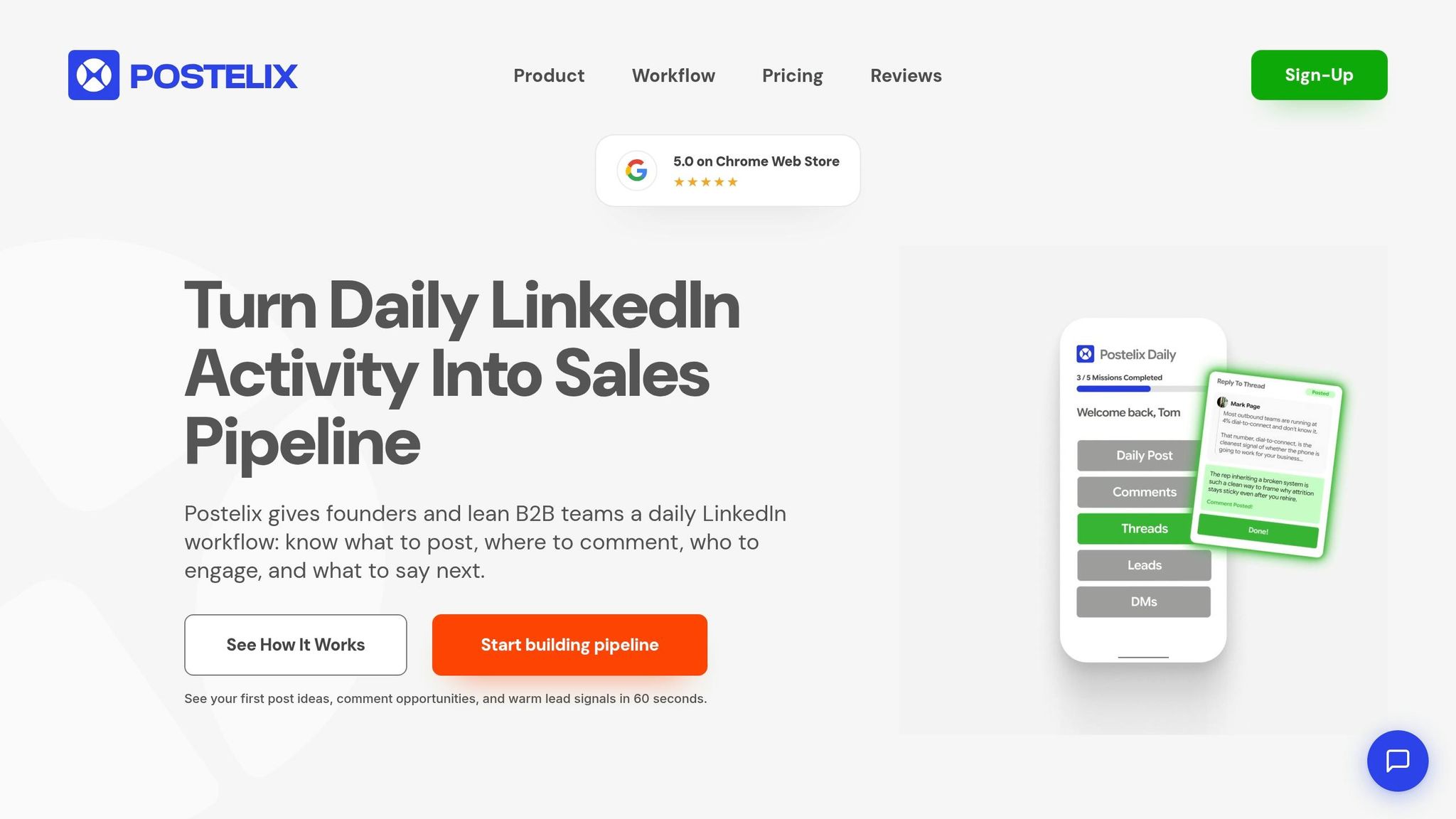
Postelix is a Taplio alternative for LinkedIn lead generation specifically designed to help you execute intent-based strategies effectively. Its 24/7 Hot Lead Agent scans LinkedIn for intent signals like relevant keywords or competitor activity, surfacing 25–50 high-potential leads daily. This automation eliminates hours of manual work and ensures you’re always focusing on the right prospects.
The platform also generates voice-matched posts and authentic comments, keeping you active in conversations that matter. This visibility is crucial - when your name consistently appears in a prospect’s feed, your eventual direct message feels more like a natural follow-up than a cold pitch. In short, Postelix helps you stay ahead of the curve and ensures your outreach is both timely and relevant.
sbb-itb-f8f3793
How to Get B2B Clients on LinkedIn in 2026 (Intent-Based Outreach System)
How Generic Outreach Works on LinkedIn
Building on the comparison with intent-based strategies, let’s break down how generic outreach operates and why it tends to underperform on LinkedIn.
Common Patterns in Generic Outreach
Generic outreach floods inboxes with templated messages, hoping to convert a small percentage of recipients. These messages often follow a predictable formula: they start with a generic compliment like, "I came across your profile and was impressed," quickly pivot to a product pitch, and end with a request for a 15-minute call. The only customization comes from basic tokens - like the recipient’s name, job title, or company - inserted automatically with minimal variation.
Instead of targeting prospects who show active interest, this method relies entirely on volume. In 2026, about 30% of sellers still send over 100 connection requests per week, and a staggering 87% of those requests include no personalized message at all. The strategy is straightforward: send enough messages, and a few are bound to convert.
This approach is the polar opposite of intent-based messaging, which prioritizes tailored, timely engagement.
Why Generic Outreach Falls Short
Unlike intent-based messaging, which aligns with buyer behavior, generic outreach struggles to engage. Response rates for these mass messages hover between 3–5%, and for templated InMails, they can drop below 1%. LinkedIn has also introduced measures to discourage repetitive messaging, limiting Open InMail sends to under 100 per month - a sharp 87% reduction from earlier limits. Ignored InMails now permanently consume credits, while only responses earn them back.
Semir Jahic, CEO and Co-Founder of Salesmotion, sums it up well:
"LinkedIn is not punishing outreach. It is punishing lazy outreach."
Why Teams Still Use Generic Outreach
Despite its flaws, generic outreach persists. One reason is that it’s easy to measure. Activity metrics, like the number of messages sent, are simpler to track than deeper engagement metrics. Additionally, the sheer volume of outreach occasionally yields results. Even if only a small percentage respond, those few meetings can create the illusion of a successful system.
However, this short-term thinking comes at a cost. Pete Busam, Founder and CEO of Equilibrium Consulting, explains:
"Volume trades short-term activity for long-term damage because it conditions buyers to ignore outreach and weakens brand perception."
Over time, generic outreach not only erodes trust but also damages brand credibility, making future efforts even harder.
Intent-Based Messaging vs. Generic Outreach: A Direct Comparison
Key Differences in Strategy
The core distinction between these two methods lies in what initiates the outreach. Generic outreach relies on a static list based on firmographics - like company size, industry, or revenue - and essentially guesses who might be interested. On the other hand, intent-based messaging asks a more dynamic question: "What changed?".
Generic outreach typically uses basic name and company personalization, which has become the bare minimum. In contrast, intent-based messaging elevates personalization by incorporating real-time signals. It follows a structured approach: starting with a hook tied to a specific social signal, connecting it to relevance with a bridge, and ending with a low-friction call to action. Timing is also critical - while generic outreach adheres to a fixed schedule, intent-based messaging is more agile, often requiring follow-up within 24 hours of spotting a relevant signal.
These differences in execution translate directly into measurable performance outcomes.
Performance and Pipeline Results
The success of these approaches becomes clear when looking at the numbers. Intent-based messaging consistently outperforms generic outreach, achieving reply rates between 15% and 30%, with meeting conversions at 8.7%. Compare that to the meager 1.2% reply rate for generic cold outreach. Companies using intent data also report 36% higher conversion rates and 29% lower acquisition costs.
A real-world example highlights this disparity: A B2B SaaS founder cut down from 100 generic messages to just 20 intent-based ones. The result? Acceptance rates soared from 12% to 55%, leading to six demos in a single month.
Effort, Tooling, and Risk
The table below breaks down the operational differences between these two strategies:
| Factor | Generic Outreach | Intent-Based Messaging |
|---|---|---|
| Volume | 10,000+ messages/month | 500–2,000 messages/month |
| Time per lead | Seconds (automated) | ~3–5 minutes with AI assistance |
| Cost per meeting | $500–$1,000 | $50–$200 |
| Spam/restriction risk | High | Low, with compliant tools |
| Primary goal | Create relevance | Respond to existing urgency |
Generic outreach carries inherent risks, including spam flags and potential damage to a brand’s reputation. Intent-based messaging, by contrast, minimizes these risks by aligning with natural engagement patterns, especially on platforms like LinkedIn.
The tools you use can make or break your intent-based strategy. This approach requires features like signal tracking, AI-assisted writing, and a review process to ensure quality. Platforms like Postelix streamline this process by integrating intent data with AI-generated, voice-personalized messaging. This reduces manual effort while maintaining the relevance crucial for success.
"Outbound should be built on signals, not spreadsheets." - Chris Walker, CEO, Passetto
Choosing the Right Approach for Your LinkedIn Strategy
Matching Your Approach to Your Sales Goals
Your sales goals should guide how you approach LinkedIn outreach. For high-value B2B deals - where a single contract could be worth tens of thousands of dollars - intent-based messaging is the clear winner. In these scenarios, relevance matters more than volume. It's about crafting messages that resonate with your audience.
Generic outreach still has a limited role in massive, undifferentiated markets. But even here, its effectiveness is fading. LinkedIn's InMail caps and credit system have made high-volume messaging harder to sustain. Each ignored message costs you credits, while responses help you earn them back. This shift forces a move away from mass messaging toward more personalized, thoughtful engagement.
Moving from Generic Outreach to Intent-Based Messaging
Relevance beats volume every time, making intent-based messaging essential for long-term success. Start small by focusing on 2–3 key signals, like job changes or content engagement, before expanding to more nuanced triggers, such as hiring trends or funding announcements.
The process itself is straightforward but impactful. Begin by interacting with a prospect's content - like or comment on their posts - before sending a message. This simple step can boost acceptance rates by 15–18 percentage points. When you reach out, structure your message with three key elements:
- A hook: Reference a specific signal that caught your attention.
- A bridge: Connect the hook to the prospect's situation or needs.
- A low-friction ask: Instead of pushing for a meeting right away, offer something helpful, like a relevant case study.
Automation tools can make this transition smoother. For example, AI-assisted workflows can cut research time from hours to mere minutes. Tools like Postelix streamline this process with features like its 24/7 Hot Lead Agent, which identifies prospects showing buying intent in real time. Its DM Writer Assistant also helps craft personalized messages that still reflect your tone. These tools make it possible to implement intent-based strategies without needing a large research team.
Long-Term Impact on Brand and Relationships
The way you show up in someone's inbox directly affects how they view your brand. Buyers are quick to spot templated outreach, and generic messages don't just get ignored - they can even lead to spam flags, cutting off future opportunities with that account.
Intent-based messaging, on the other hand, demonstrates attention to detail. Over time, this builds trust and turns cold prospects into warm connections. A thoughtful, relevant message can leave a lasting impression, helping you convert one-off interactions into meaningful, long-term relationships. This approach ultimately strengthens your pipeline and boosts your reputation.
"LinkedIn is not punishing outreach. It is punishing lazy outreach." - Semir Jahic, CEO, Salesmotion
Conclusion: Key Takeaways for LinkedIn Outreach
What to Remember
Intent-based messaging delivers far better results than generic outreach. It can increase connection acceptance rates from 20–25% to an impressive 45–60% and boost meeting booking rates from 1.2% to approximately 8.7%. Additionally, sales cycles tend to be about 27% shorter with this approach, while 79% of B2B decision-makers actively ignore cold messages that lack context. With LinkedIn tightening InMail limits and buyers showing a clear preference for personalized communication, relying on high-volume, templated outreach won't cut it anymore. The real advantage lies in interpreting buying signals and acting on them intelligently. This shift is crucial for driving meaningful engagement.
"Cold outreach starts from a guess. Intent-based outbound starts from a public buying signal, a real problem, and better timing." - Leadline.dev
Next Steps for LinkedIn Growth
Now’s the time to rethink your strategy and embrace intent-driven outreach. Start small - focus on tracking 2–3 high-impact signals like content engagement, job changes, or hiring trends. Use these signals to tailor your messages around moments that matter. Make sure every message you send adheres to the "Three Cs": Context, Clarity, and Curiosity.
Timing is everything. High-intent signals lose their effectiveness quickly, with response rates dropping sharply after 72 hours. Tools like Postelix can help by identifying high-intent prospects and enabling more personalized communication. For teams aiming to grow their pipeline, this isn’t just helpful - it’s a practical way to stay ahead.
FAQs
What counts as a strong intent signal on LinkedIn?
Strong intent signals on LinkedIn come from specific actions users take that indicate interest or intent. These include engaging with relevant posts through likes, comments, or shares, viewing profiles, or showing activity like job changes, hiring announcements, or funding updates. Other signals might involve company news, such as product launches or business expansions, and even interactions with competitor content. Each of these behaviors can point to someone actively exploring or considering a product or service.
How fast should I message after spotting intent?
You should reach out within hours of spotting an intent signal - preferably within minutes. Quick responses dramatically boost the chances of getting a reply, while delays can sharply decrease engagement. Acting fast allows you to tap into the prospect's interest while the topic is still fresh and relevant.
How do I switch from generic outreach to intent-based messaging?
To make the leap to intent-based messaging on LinkedIn, start by paying attention to real-time signals. These could include actions like someone engaging with your posts, updating their job status, or visiting your profile. These subtle cues can reveal interest or intent, giving you the perfect opportunity to connect.
The next step? Craft personalized messages that show you’ve noticed these actions and highlight why your outreach is relevant. This approach not only feels more genuine but also increases the likelihood of a response.
Timing plays a huge role here. It’s crucial to reach out soon after spotting these signals - delayed messaging can lead to missed opportunities. While automating the detection of these signals can save time, the messages themselves should strike a balance between AI-driven insights and human touch. This way, your outreach feels thoughtful, not robotic, leading to stronger engagement and better response rates.