Find people engaging with your competitors on LinkedIn
Find the people already paying attention to your category.
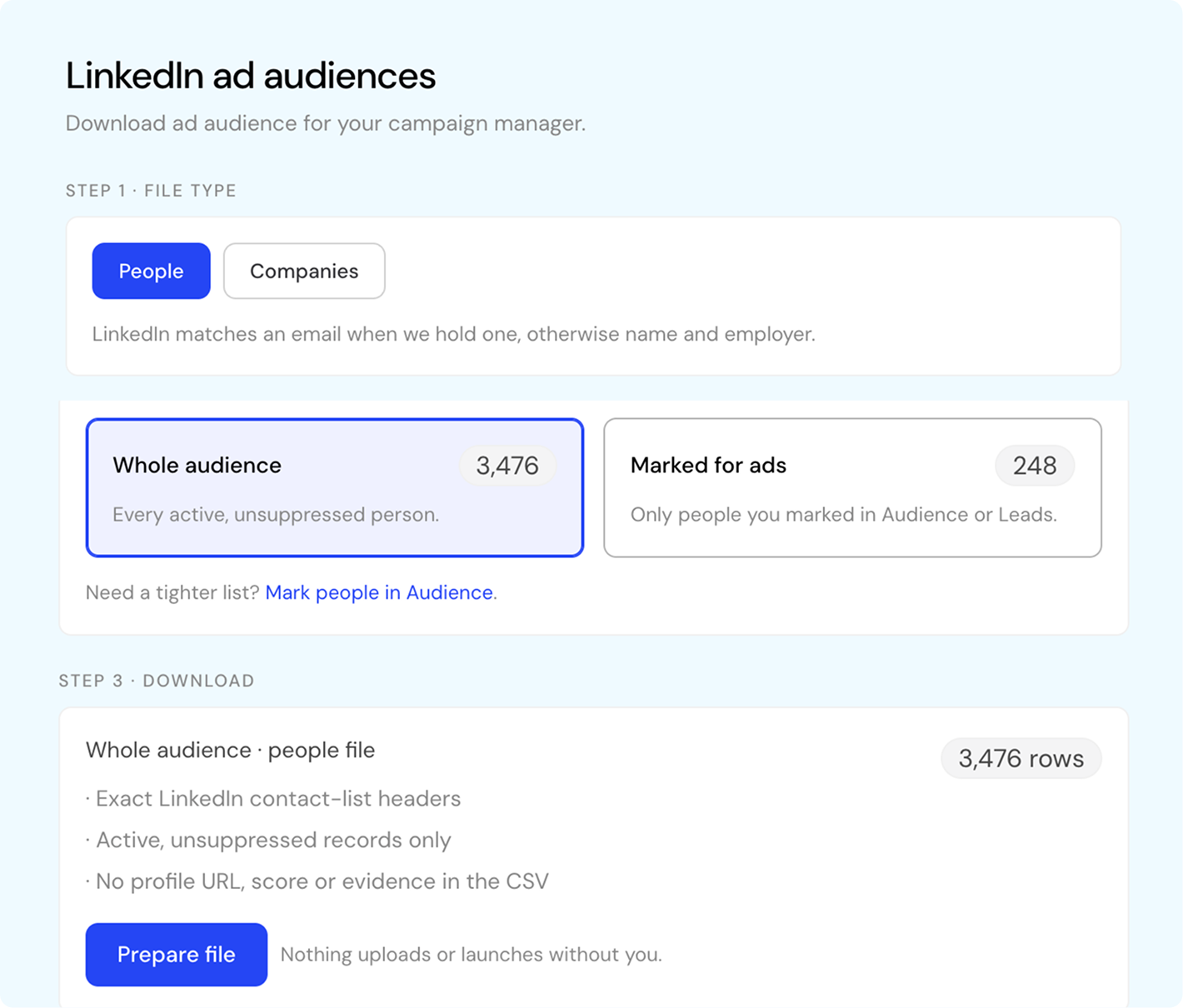
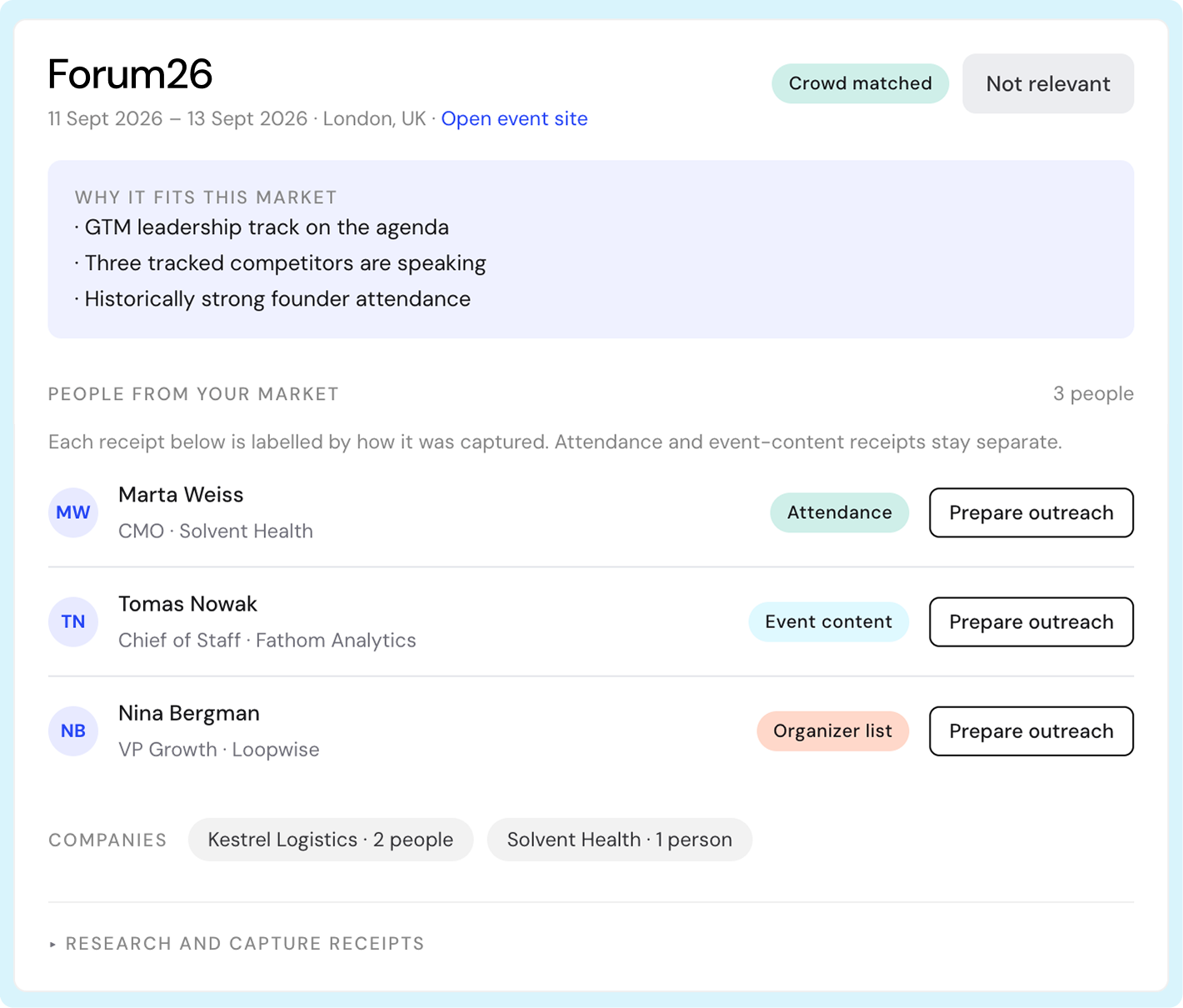
Postelix turns reactions and comments on your competitors' LinkedIn posts into a list of names, roles, companies, LinkedIn profiles and email addresses, with the source posts attached.
Use that audience to choose better content topics, sharpen your LinkedIn ad targeting, find relevant creators and start conversations with context.
The list updates every week, and your team decides who belongs.
What competitor engagement tells you.
A job title helps you decide whether someone could be relevant. A recent comment or reaction adds a specific topic and date to that profile.
For example, a head of support asking about ticket routing under a competitor's post gives you a problem to investigate. An employee congratulating the author on a promotion gives you much less information about demand for your product.
Review the post, the person's role and their company together. Keep relevant people in your audience even when there is no reason to contact them yet.
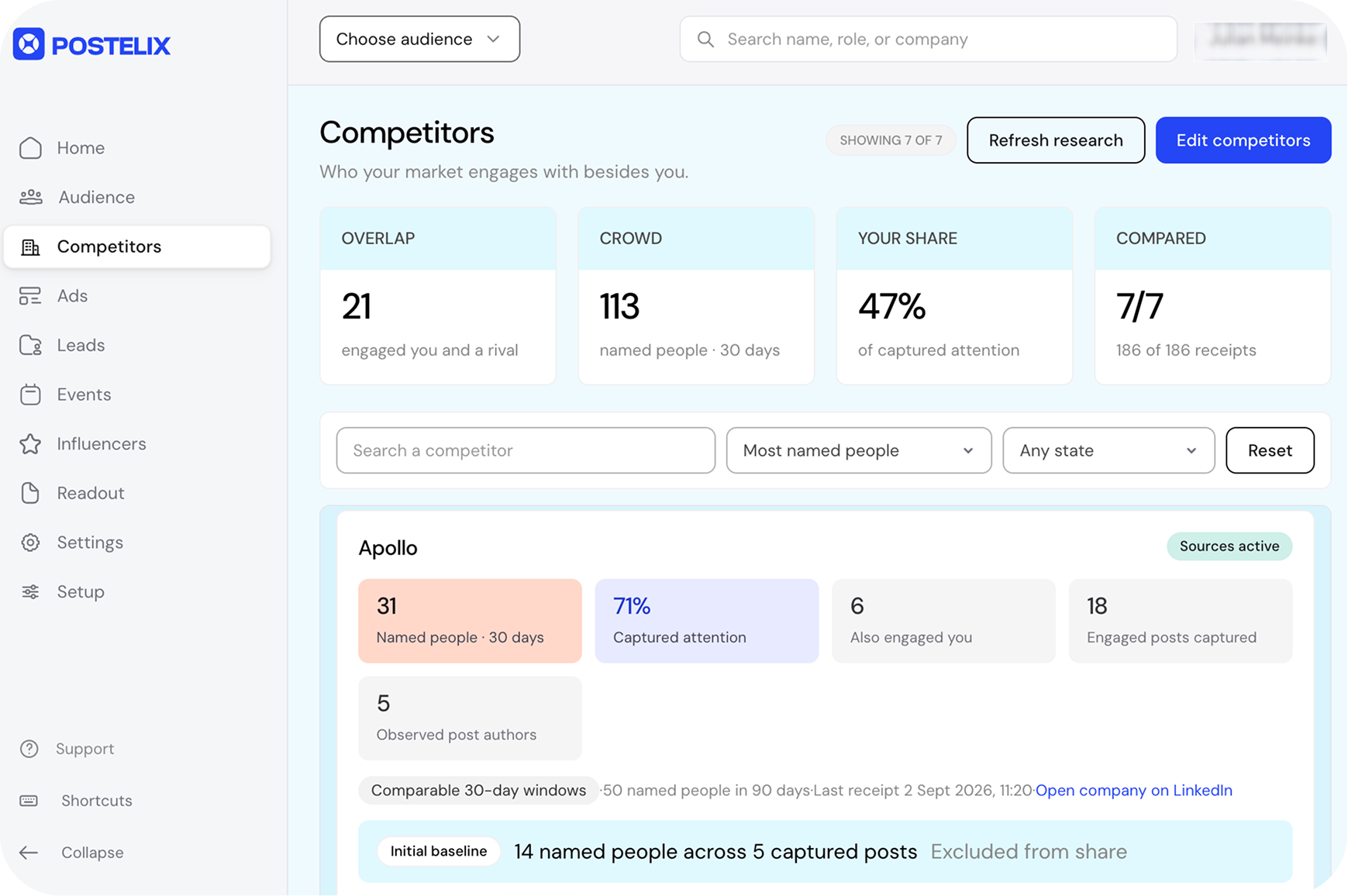
How Postelix builds your market from competitor engagers.
Anchors
We pick the competitors and category accounts your market reacts to. Six to ten is typical.
Reactions and comments
We pull every reaction and comment on those accounts' public posts across a rolling 90 day window, with the post kept attached to the person.
Title filter
We filter for roles relevant to your category. You review whether each person belongs.
Weekly re-score
The list is rebuilt every week: who entered the market, who is warming, who went quiet.
Your corrections
You strike out the wrong fits. Your exclusions carry into later updates.
Competitor engagers are one of six sources. The others are brand engagers, meaning people who engaged your own page and your team's posts; trusted voices, the creators your market follows; champions, people who bought or used you before and moved company; market trends, the topics rising in the category; and your own inputs, such as a customer list or a CRM export.
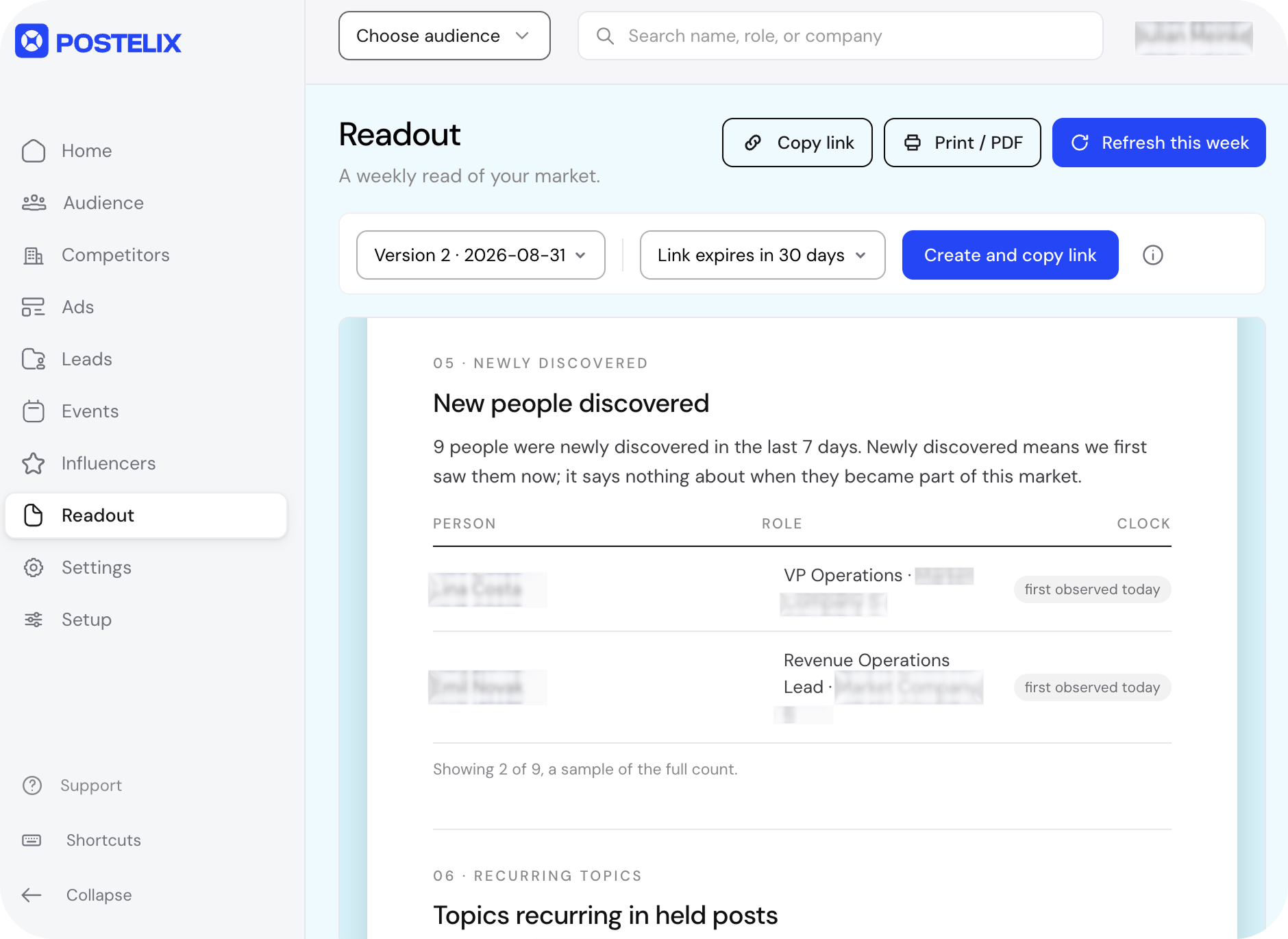
Reactions and comments on your connected team's posts can be matched to your audience, with the source post attached. Profile visits are a separate signal and do not identify which post led to the visit. Profile-view capture requires LinkedIn Premium or Sales Navigator on the connected seat.
Use competitor engagement in your marketing.
Turn audience insights into a sales plan with the outbound account brief.
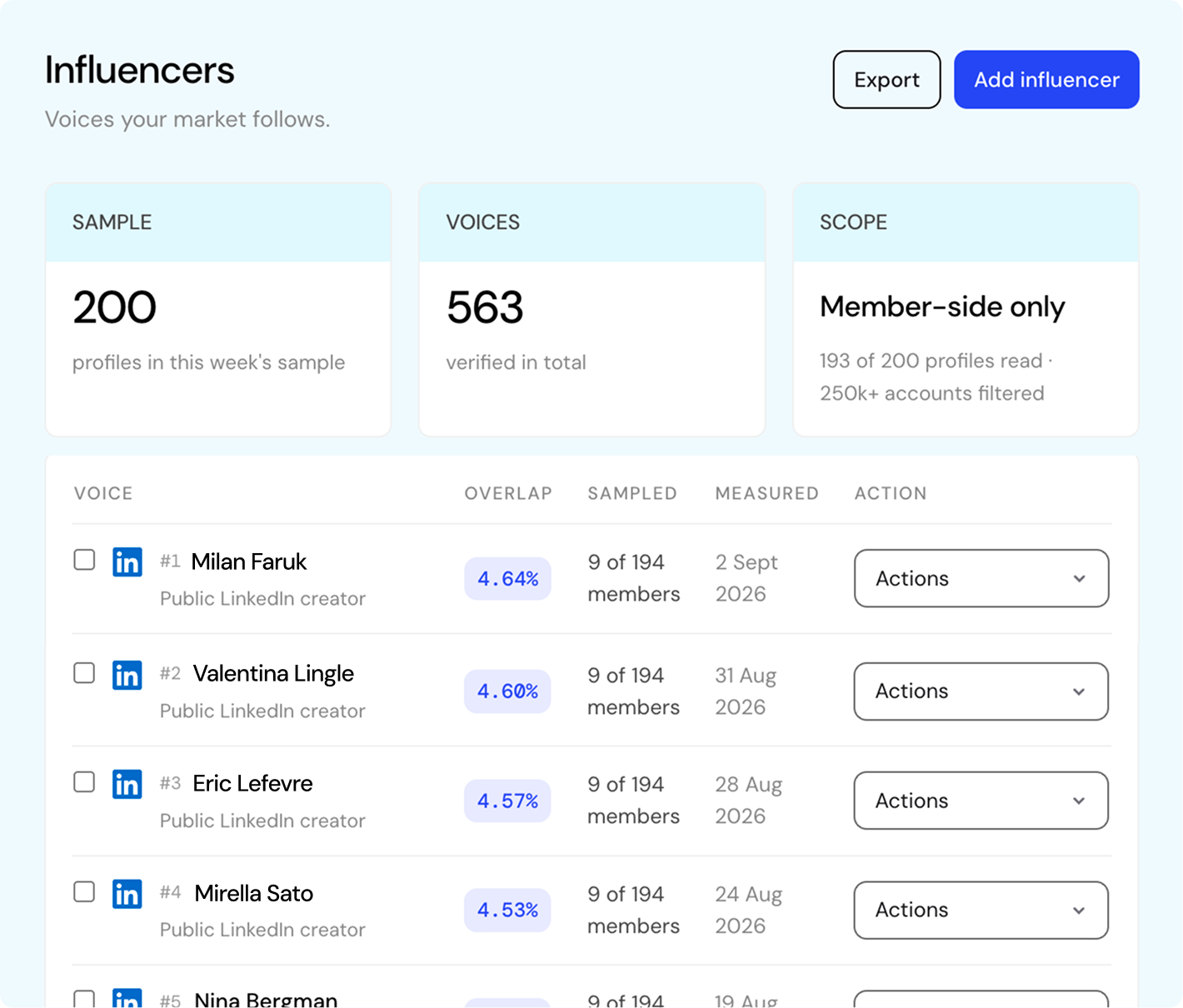
A revenue tooling market in the Nordics.
This is a real readout, pulled 27 August 2026. The market was built from competitor engagers and then title-filtered. 642 people were sampled, the 170 most active were used for the table, and the window was 90 days.
Attention published 24 posts in that window and drew zero reactions from this sampled market. We print zero as zero with the post count next to it, because the number is only true for these 170 people across these 90 days. Clari and Salesloft now post as one company, which is why they still appear with separate histories.
Gong's post about sales-call mistakes recorded 74 market reactions in this sample; a post about AI discussions and team size recorded 29. These examples can inform a content test, but do not establish which format will work across other markets. The full results are at /markets/revenue-tooling.
Method: market reactions per post = reactions and comments from the sampled market on a vendor's public posts in the window, divided by that vendor's posts in the window.
Build it yourself or use Postelix.
You can assemble a competitor engagement list yourself using public posts and tools for collecting or enriching profile data. Databar and Linked Panda describe their tools at https://databar.ai/ and https://linkedpanda.com/.
- Merge duplicate people across competitor accounts.
- Apply the same role and company criteria each week.
- Retain the post and date behind each observation.
- Keep excluded people out of later updates.
- Compare activity by vendor and topic within a stated time window.
Postelix maintains the audience and includes those comparisons in a weekly report. A manual workflow may suit a small list if someone on your team owns the updates. Compare the full workflow at /postelix-vs-linkedpanda.
Check the source behind each person.
Open the post behind an engagement to see what prompted it. Combine that context with the person's role and company to decide whether to include them in your audience and how to approach them.
The weekly report shows changes in activity and keeps your exclusions in place. For research definitions and sampling details, see /data/method.
FAQs
We work from engagement LinkedIn already shows publicly on a public post, plus vendor level aggregates and your own inputs. Postelix is built for the European rules and is a brand of Unfair Advantage Ltd in Cyprus. We never publish an engager list and never share one between customers. For your own obligations as a controller, take advice from your counsel.
Six to ten anchor accounts is normal, and the anchor set does not have to be direct competitors. Category media, associations and adjacent vendors often pull the same market. We tune the anchor set after the first readout, once you can see which anchors actually produce your people.
Then the competitor source is thin and we lean harder on the other five, especially trusted voices and your own inputs. Posting volume alone does not make a market either. In the Nordics readout, one vendor published 24 posts in 90 days and drew zero reactions from the sampled market.
You get the named people with role, company and LinkedIn profile inside your own account, and the aggregate tables in the weekly readout. The published tables name vendors and public creators only. Private people are never named outside your account.
The list combines recent public engagement with role and company filters, then updates weekly. Each engagement has a source post you can review, and your exclusions carry into later updates. Customer and CRM inputs can also be included.
The market itself is built from public posts and needs nothing from you. Capture of engagement on your own content runs on a connected seat, and profile view capture on that seat needs Premium or Sales Navigator.
Book a demo. Then run it on your own market for 7 days.
The demo is with the founder and shows the loop in action. A work email is enough, no card.