LinkedIn audience intelligence for B2B teams
Know who is paying attention to your category on LinkedIn and what gets their attention.

Postelix builds a named audience from competitor activity, your team's engagement and your customer data, then keeps it current every week.

See which vendors and topics attract that audience, which creators connect with it and who is becoming more active.

Put the findings to work in your content, ads, events and follow-up.
What is LinkedIn audience intelligence?
LinkedIn audience intelligence connects people and companies with their activity in your category. In Postelix, you get names, roles, companies and profiles, plus the posts behind their engagement.
A weekly update shows who is new, who is becoming more active and who has changed companies. Your customer records add relationships that public activity alone cannot show.
That gives your team a shared starting point for content planning, campaign targeting and sales conversations.
The six sources your market is built from.
Competitor engagers
People who reacted to or commented on your competitors' public posts.
Brand engagers
People who engaged your company page and your team's posts.
Trusted voices
The public creators and institutions your market follows, and the people around them.
Champions
People who bought or used your product before, including the ones who have since moved company.
Market trends
Topics rising in the category, and who is reacting to them.
Your own inputs
Customer lists, a CRM export, the accounts you already care about.
The sources are merged and de-duplicated into one list, then title-filtered to roles relevant to purchases in your category. You strike out the wrong fits and the strikes persist.
Reactions and comments on your team's posts can be matched to this audience with the source post attached. Profile visits are recorded separately where available; they do not reveal a source post. Profile-view capture requires Premium or Sales Navigator on the connected seat.
What the list replaces.
The bought lead list
Out of date the day you buy it, and your competitors have the same one.
Job-title targeting
180,000 people with the right title, none of whom has ever reacted to your category.
The follower count
Most followers clicked once and never came back.
Impressions
They tell you how often something was shown. Not to whom, and not whether anyone cared.
Four ways to use the audience.
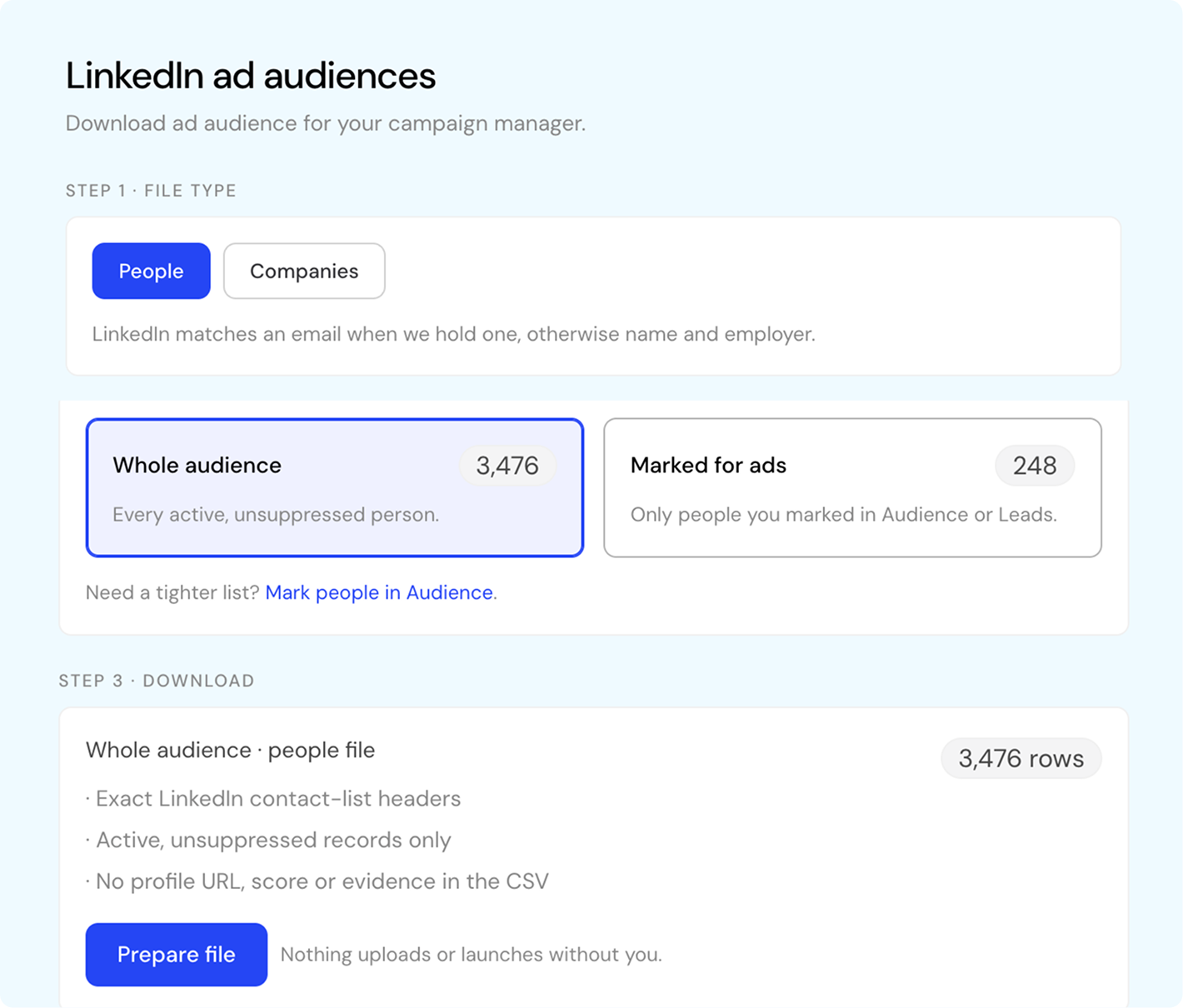
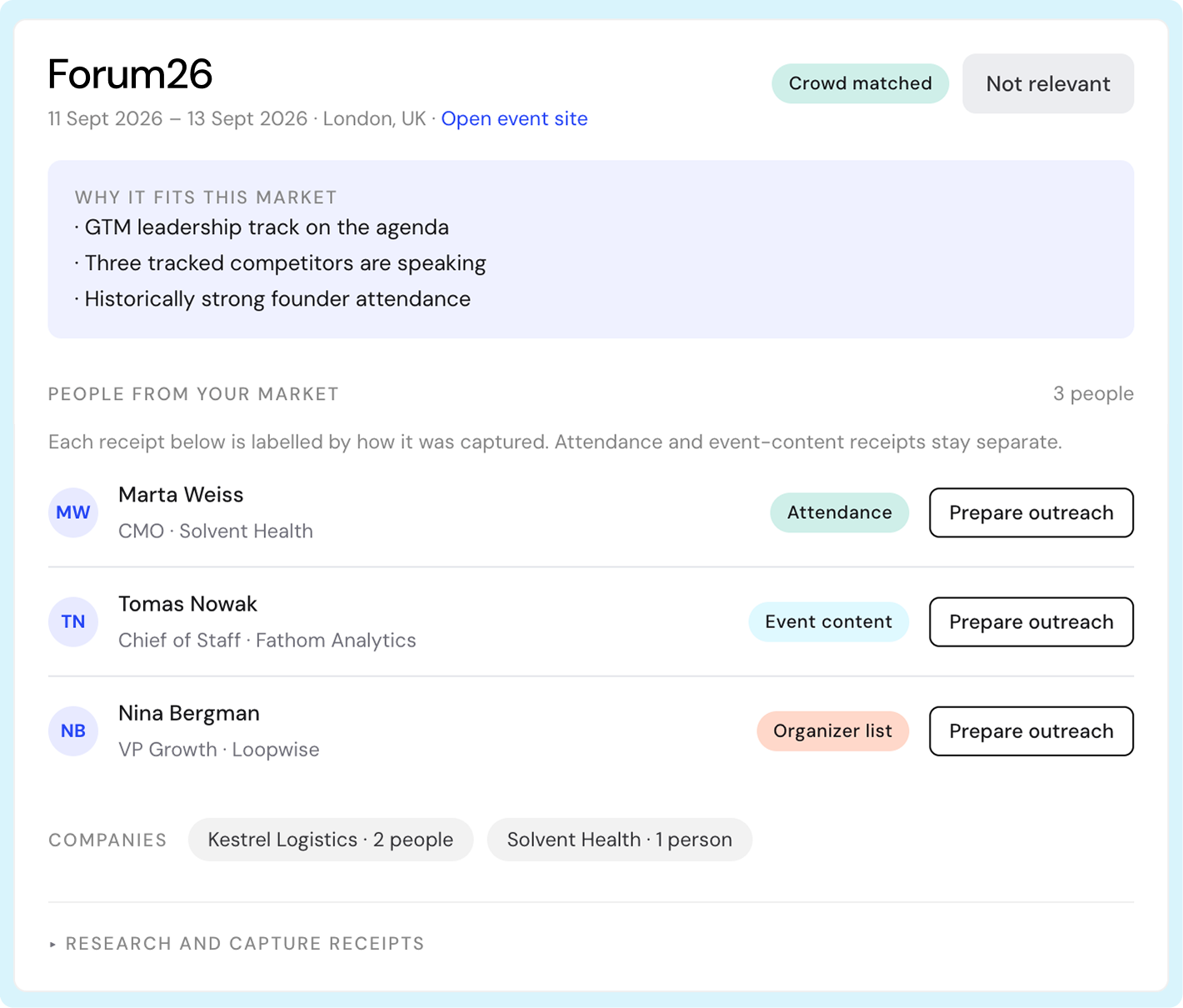
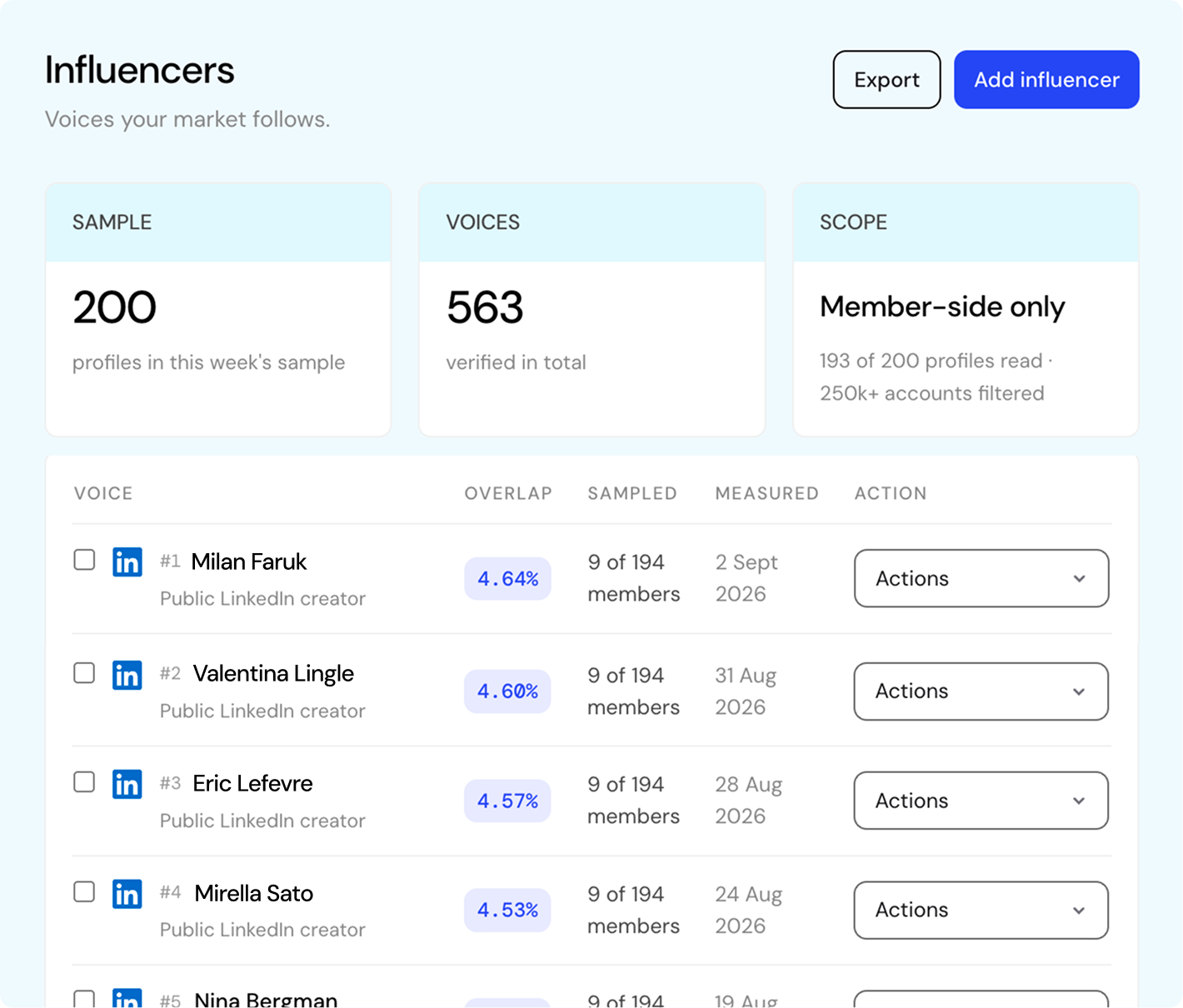
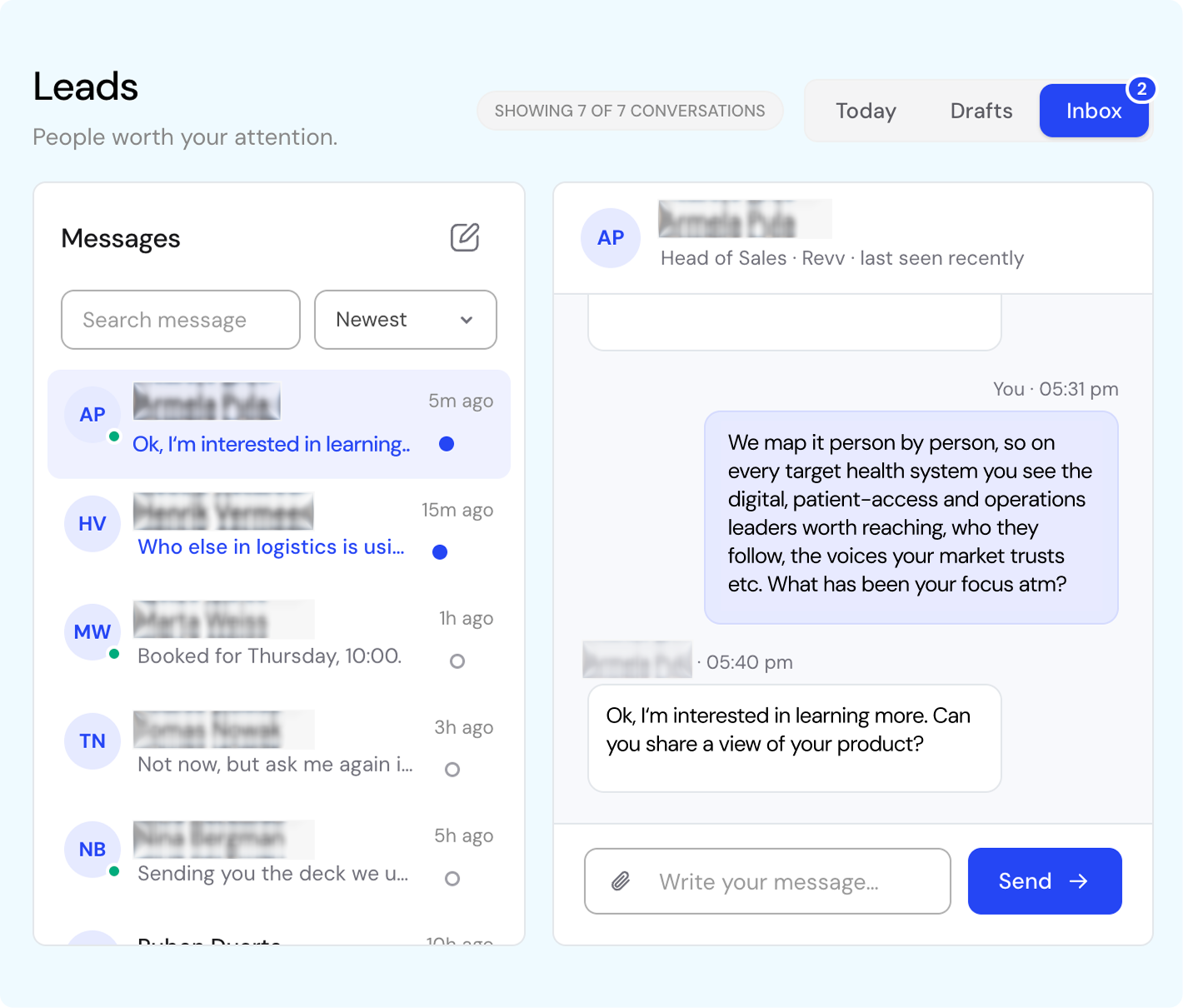
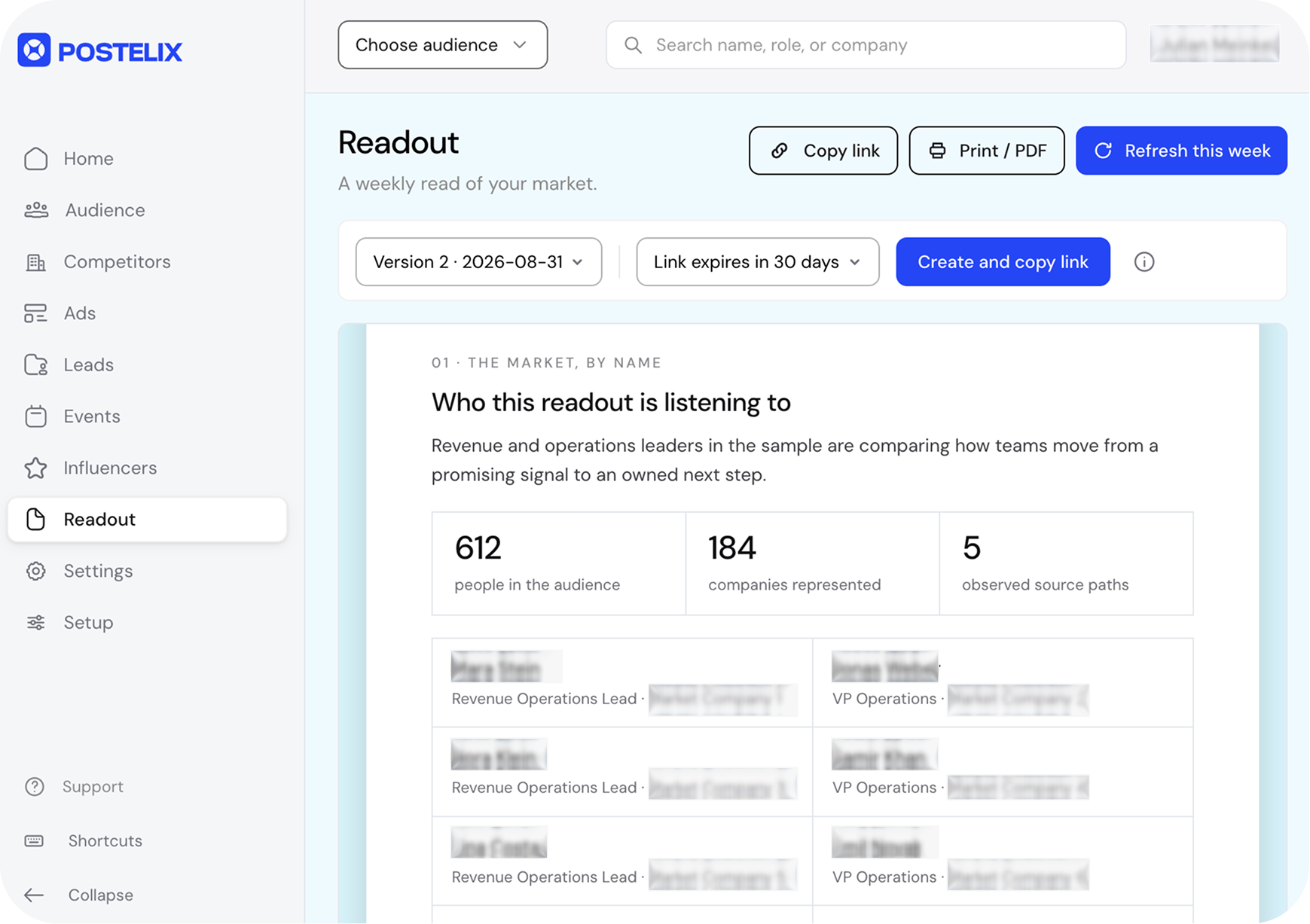
The weekly readout.
The weekly report covers audience size, segments, engagement by vendor and topic, relevant creators, events and changes in activity.
Here is what competitive attention looks like, from a London pull in August 2026 in ecommerce customer service AI. 264 people were sampled and the 170 most active were used.
What the data is not.
We build from public reactions and your own data, not from a billion profiles.
We count what people did publicly.
A matching title is an indication. That is why we write "the pulled market", not "the buyers".
Postelix is built for the European rules: public reactions, company lists for ads, no published lists of people. How it is built is stated on every page. A "GDPR compliant" stamp does not replace a description, so we do not carry one.
Pricing for LinkedIn market data.
 500 accounts watched · 5 connected LinkedIn accounts
 Readout, draft testing, capture
 Follow-up drafting for one poster
 Ad budget stays in your own account, we recommend from EUR 500/month1,500 accounts watched · 15 connected LinkedIn accounts
 Trusted-voice ad partnerships
 Shared view of who is warming up
 5,000 accounts watched · 50 connected LinkedIn accounts
 Quarterly strategy
 Priority support
Users are unlimited on every plan. Results depend on available evidence. Prices exclude VAT where applicable. Stripe collects billing address and business tax ID at checkout.
Who uses LinkedIn audience intelligence?
Postelix is designed for founders and in-house marketing teams at B2B companies, particularly teams working a defined category and region.
It is most useful when someone can act on the findings: publish content, review targeting, assess creator partnerships and follow up with relevant people. Start with one market and an owner for the weekly review.

FAQs
LinkedIn market data combines people, companies and public engagement in a defined category. Postelix maintains that audience and provides a weekly report on vendor engagement, topics, creators and changes in activity.
Sales Navigator helps you search and save profiles and accounts. Postelix combines public engagement with your own inputs to maintain an audience and compare what attracts its attention. The tools can be used together.
It is observed public engagement combined with your own records. It can help you investigate interest in a topic, but it does not establish an active purchase or replace qualification.
Audience size depends on the category, geography and inclusion rules. Tier 1 covers up to 2,500 people and Tier 2 up to 7,500. Those are plan limits, not estimates of how many buyers exist in a market.
A market review covers the audience definition, segments, vendor engagement, relevant creators and changes in activity. Published tables state their sample and time window. Book a call to review the scope for your category.
Start with a readout of
your own market.
We build the market from your category's public engagement and walk you through the numbers on a call.